Thursday, August 5, 2010

Travellers in Thailand

Well, this is all wonderfully interesting!

In our past, we have had the good fortune to enjoy the most glorious holidays (restful or active; indulgent or economical) and taken home memories and photographs to return to at will, but there will be none that form as much a part of us as these travels that we have experienced in environments that are radically different from our usual milieu. Our travelling has given us opportunities to become generally more aware in circumstances and environments other than those that we are used to… which we mistakenly call “normal”.

There can be few places that give a western tourist more chance to do this than Thailand. Travelling in Thailand gives new experiences to every one of our senses by the minute: this is a country of glorious abundance in sensory stimulation! Simply moving between two villages offers an overload: the buildings, people, vegetation and modes of transport all a feast for the eyes; food stalls and markets are feasts for eyes, noses and taste buds; the beautiful written language looks poetic and musical while the sounds of the language have the lilt of an exotic song… and, as a feast for the ears of older travellers like us… curiously the pop music sounds of the 60s play everywhere! The frequent sounds of firecrackers being set off to chase away bad spirits may sometimes, however, be a burden on sensitive western ears.

The colours.... a roadside orchid nursery (selling growing plants at 50Baht: about US$1,60); beautiful shrines outside every home and retail venue; colourful scarves on every fisherman’s long-tail boat to flutter and chase away bad spirits; the vibrantly hued fruit and vegetables at the travelling fresh produce market in the field (while the fish and meats at the same market are so fresh as to offer no offence.... unlike the fish at the Phuket town market, after 11am!); magnificent old Sino-Portuguese buildings may appear unkempt until you see attention being paid to the front edifice at ground level and the contrast makes the picture; and the bright fresh paintwork of the lone old petrol station where the mode of petrol dispensing comes from another era.

The smells (apart from the fish above)... there are food-stalls and hawkers around every corner, giving rise to unfamiliar but stimulating smells at every turn that make one endlessly hungry! The huge variety of foodstuffs will tempt every palate and it is all tasty: you just need to be prepared to try something new, even if you cannot understand the person explaining the dish to you nor read a single word on the rough menu. It often occurs that you and a whole group of people nearby will start sneezing and coughing simultaneously…. Chilli is being fried nearby! You can always control the heat or bite of the dish when you put in your order… unless you want to challenge your senses extraordinarily!

The sights of people leading their lives in this, their (normal) home environment, are endlessly fascinating.... and none more so than how they get around. Driving scooters on these roads has been a real eye-opener as we generally succumb to local practice and take the locally-adopted pragmatic stance on which side of the road to drive and other small issues..... but that is the subject of another blog!


The variety of Thailand’s abundant natural beauty (incredible soaring island structures, beaches, overflowing vegetation, mysterious caves and hongs) is matched in its populated environs, but this exotic culture has an attraction and beauty so different from that of typical western towns. In Thailand, there is something to hold the interest and stimulate tourists on sea and land and around every corner: nothing is like “home” and therefore everything becomes imprinted in the memory, even if travelling here is not always comfortable or easy. Here, Erik and Cliff carefully negotiate the canoe through a pitch-dark narrow tunnel to take them through to a hong (cave where the roof has collapsed and the beautiful “room” thus formed has developed its own eco-system).
Part of the fun of being here is the foreign language; although this obviously has its drawbacks and frustrations, it contributes wonderful experiences to our memory banks…. and hopefully our improving non-verbal communication skills will stand us in good stead for games of Charades in our dotage! Recently Rolf and I were in different situations asking for two products: soda water and battery water. Saying those words in our flat South African way resulted in no glimmer of understanding from the listeners; however we eventually found that using a higher tone on the last letter assisted everyone: so say …. Sod-aaaah and batte-leeeeh to great happy smiles, comradely nods and a scurry off to help you. Another lesson learned: Thai people cannot put two consonants together; saying sipoon, pilate and tewenty will ease understanding.

Listening to conversations between Thai people is fascinating: huge tracts of information are conveyed between them without our understanding a single word, syllable, letter, and there is so much communication in the language that relies on tonal inflection that it sounds melodious. For different reasons, listening to the radio (with English-speaking Thai presenters) gives another glimpse into this world, and particularly so when listening to “Thailand in perspective”, a news programme that is “… live from the PR department of the Royal Thai Government”.
On land, we get around on scooters and sometimes in a Tuk Tuk (above, with the family), while travelling using Ketoro as our home base is proving exceptionally rewarding as we get access to beautiful islands that the day trippers do not go to (view through a port-light hatch below).

The two most recent sets of visitors (friends John and Wendy from NZ then family Erik, Diana, Karl and Cliff from Aus) explored islands with us, enjoying the beaches, villages, caves, sunset drinks (John’s driftwood photo from a sundown beach) and sometimes on-land resorts as well as being taken through their paces with normal life on Phuket Island. Sometimes the input of different experiences may have been overwhelming!

Travelling on a boat does occasionally also elicit understandable anxieties and prove challenging to our visitors: few people would request, before departure on their holiday, storms whilst on board, nor cramped quarters or having to be endlessly mindful about water, gas and power usage, (let alone everyone’s fears about the usage of the heads / toilet…. not to be discussed here!) but they have all rallied round magnificently. Hopefully, after the travels with Ketoro are done and they recall their photos and memories, the range of experience enjoyed in such an incredibly diverse land will leave them with imprinted fond memories of a real adventure vacation!

Of course, there are times when the hosts may question their own invitation of these guests; for example our very good friends from New Zealand who boast a pretty good rugby team (at present). We are South African, a nation equally passionate about its rugby, and the gods saw fit to schedule a game between the two nations while they were on board. Being the good-natured and fair-minded Springbok supporters that we are, we resolved to generously keep feeding them beer and snacks during the game, no matter what. Imagine our surprise when we awoke to find an All Black flag flying from our masthead! You cannot imagine the shock, horror and outrage felt by the hosts, nor the speed with which the ancestry and general character of the guests was denounced as a South African flag was hoisted above the (rather large) Kiwi flag. We needed our beer and snacks after this…. particularly as our team was soundly thumped.

Our Australian family was less forward (and also less disparaging when their adopted team also thrashed ours the following week). They, in fact, took a different approach to our mast-head as we made a pre-emptive strike by hoisting them up the mast. This (below) is a birds-eye view of us on the trampoline, taken by Erik half-way up the mast … happily the boat was very still at anchor that evening!
In the privileged situation of having done so much travelling in a short time, we often forget momentarily where we are (and in fact the Kothes, who travelled to Malaysia and back with us, had the same experience)… is this a syndrome common to all travellers? (Or just old ones!?). Well, an experience with a lost traveller was an eye opener… anchored off Ko Hong with the family on board, we saw a man approaching at pace (but without skill) on his canoe. Invited on board to catch his breath, he told us his story (well, what little he knew of his own story….). In a nutshell, he was part of a canoe- day-trip group and the big boat had left without him. Having been told they all had an hour to explore on their own, he returned late to find the boat gone. No problem, we had a phone… what was the boat’s name and to what company did it belong? “Don’t know”. Ah…. So we produced several brochures and asked him to identify the boat from the pictures. He was unsure. Ah…. So we phoned one of them and dealt with a concerned and patient person at the other end of the line, describing the canoe (was it perhaps one of theirs?) and asking if their boat was possibly missing a client, by the name of Raymond (surname withheld …. Wilson!) Well, they don’t know their clients by name (!) as they just know how many to collect at each hotel …. “Raymond, at what hotel are you staying?” He was unsure. Ah….

Turns out our very nice confused Raymond was an Argentinian from Australia (he was unsure if he would be allowed back as he thought his visa had expired… not a lot of clarity of thought there…. No wonder he did not know from what hotel or boat he had come!) Our (or, rather, Raymond’s) story has a happy ending: a big boat came round the corner… it was doing laps of the islands looking for the fellow. Raymond was unsure (still) if it was his boat so he and Rolf popped off in the dinghy while Erik gallantly paddled the canoe across. The rest of the very large group on the boat clapped and cheered joyfully and the tour operators were undoubtedly glad to have their canoe back (oh, and Raymond too….).

With many smiles and waves at Rolf and Erik returning on the dinghy, Raymond took off into his future… you are sure to bump into him sometime, looking lost; send him home to Australia…. um Argentina…. um Thailand…

Interestingly, various dictionaries put tourists as persons who travel or visit a place for pleasure, some referring to the word “tour” originating from Latin or Greek words meaning “circle” and “return”, i.e. going home at the end. Wikipedia also offers “One who visits a place or attends a social event out of curiosity, wanting to watch without commitment or involvement.” Travellers, meanwhile, are said to be Gypsies or other nomadic persons, with Wikipedia also offering caravan dwellers and tinkers as travellers.

Well, we all wish for everything: travelling nomad-like to see as much as we can of our world and its peoples, simultaneously with a wish for fun and with a desire to return home. Here on Ketoro, we take our home (caravan?) with us, such is the beauty of cruising, and when friends and family come to spend time with us we love to show them something of our nomadic travelling tourist lifestyle.

Sunday, July 11, 2010

First month in Thailand

Siam. A Kingdom. Romantic words conjuring exotic images. Warm and caring people with an intriguing language and script, fascinating and exotic architectural influences and temples. All of these thoughts come to mind on approaching Thailand. Turns out, it is all here! The romantic name for the original land is still used by several organisations, there is still wide-spread reverence for the King (although there was political upheaval in Bangkok and the north of the country for some time) and the Thai are indeed a nation of generally attractive and welcoming people. Wat Chalong (Wat means Temple) provides hours of interested exploring to the tourist whilst simultaneously being used by local Buddhists.


This first month in Thailand has alternately delighted, distressed, restored, exhausted, fascinated, depressed and enraged us as we have done, seen, eaten and experienced an amazing variety of things.

We have been based on and around Phuket Island, on the west coast of Thailand. This island is starting to feel like home: generally using motorbikes/scooters (2-up) we have covered much of the area either in sight-seeing or provisioning trips or general errands (others said we looked like locals one shopping day: Irene’s backpack fully stuffed with shopping including 2 fold-up stools, the legs off which protruded out the top, another huge carry-bag of goods between us, and a boxed fan at Rolf’s feet!) Shopping is invariably a fascinating experience on this island which is busy and vibrant, offering almost any retail or services required (albeit often in buildings that would be on the condemned list in many countries): there are many small supermarkets which are a cut above the haphazard “spaza” shops found in the Seychelles and Maldives and Madagascar, while there are also absolutely huge stores in which one can get anything. Really!! These stores range from one called “Super Cheap” (a huge ramshackle structure covering several acres that houses hundreds of individual merchants and traders in a chaos that lacks any structure or organisation, and with safety issues that are indescribable…. but which has a food court where you can get tasty little pork kebabs for 16 US cents); to a vast Tesco (as one would expect) to Central Festival (very up-market). At every store, the fresh fruit and vegetables on offer are of wonderful quality and beautifully presented (we counted 18 varieties of mushrooms in one display!!). Also wonderful are the sights of local people going about their day...


Generally eating at local venues, we are always happy with the taste and price of the food (local food for about 30-50 Baht, i.e. SA R7-12): the lovely couple below fed us royally at their roadside café, while there are any number of hawkers on bike-trolleys from whom you can buy fruit or a small meal, and there appear to be food venues every hundred metres on every road! Apparently, few locals have kitchens in their homes, as they generally eat on the street and not at home.


The east side of Phuket is non-touristy area, with Phuket town centering the network of incredibly busy and built-up roads. Phuket old town shows off some of the original Sino-Portuguese architecture from the first settlers involved in tin mining. The west side of the island is for the tourists: Patong Beach / Town is the original tourist centre while up and down the coast there is almost no break between the beaches and resort centres, all exploding with the growth in tourism over the last decade. A view over some of the bays on the west coast to whet your appetite…


One of the first things you notice, with alarm, is the electrical reticulation on the island. The electrical cables snake through the sky and on top of buildings and sometimes along the ground in a chaotic mess. The plug sockets are the ones we, in SA, associate with bathroom electrics: i.e. no earthing facility and no switch and of very light construction. With none of the sockets having switches the blue flash jumping from plug to socket as you insert the former, is a reassurance that this socket truly is live and will do its job….! This photo was taken outside the path up to a resort on the beachfront road of Patong. We were delighted to see their support of the Soccer World Cup and hoped that many went to watch the games: when we attended the TV presentation of two SA games at a near-by resort we were the only people there!


In Phuket, we have stayed in two of the four main harbours: Ao Chalong (Ao means bay; here, we anchor and use the dinghy to get to shore) and Boat Lagoon Marina (where we were tied up on a pontoon). Before setting off on our sailing escapade I had a few pictures in my head of what our harbours would look like and offer (apart from the glorious experience of simply arriving at an island/beach/river and simply anchoring there because you can), but I never imagined the range of experience we would have simply in our “home bases”! The sea may be calm/rolly/choppy and clean or polluted, and at a harbour anchorage there are a range of different facilities to tie up your dinghy (onto a rusting steel structure that is the working mechanism of the pontoon or the frame of an industrial size jetty/onto a hook in a barnacled concrete wall/onto a local fishing boat where the alternatives are too horrible to contemplate). So far, we have never been at a harbour which had a proper dinghy jetty.

At a marina, the effect of the tide is significant; the tidal range in Thailand is up to 2 metres. Boat Lagoon Marina is situated in the shallow flats of a mangrove swamp. It has a channel dredged to allow access through the mangroves, then the mangroves were further dredged to provide a marina at the end of the channel. You can only get through the channel at high tide and this process is done very slowly, keeping the seemingly endless winding line of marker poles on your port side, and watching the ever-decreasing numbers on the depth-sounder with disbelief and apprehension and with the knowledge that many boats have grounded here. Monohulls with deep keels have a particularly stressful time of it (some of the deeper keels can only access this marina at high tide, springs – a few days each month). The 2m tidal range is very evident: beautiful lagoon at high tide, exposed mud and rocks and boat keels on the mud at low tide. However, it was great to have electricity and water from the jetty, even though the water-cooled aircons could only be run a few hours around high tide. We had Ketoro hauled out of the water to be put “on the hard” for some boat work …. and were surprised by our sadness to see our home out of the water, like a beached whale!

Island explorations took place after leaving the marina; after our passage to Thailand, we had worked exceptionally hard on the boat and needed a holiday before a happy time with guests on board. Some of the smaller islands around Phuket are a real treat. Phang Nga Bay, east of Phuket, is famous for its limestone islands which soar up from the sea showing magnificent cliff sides greened with an amazing variety of trees and shrubs, home to many birds, including fish eagles.


These islands frequently have their bases undercut by the sea (giving them the shape of mushrooms), creating jutting stone roofs with stalactites forming a fringe around them; a shelter for the fishermen in their long-tail boats when the weather sets in. Looking closely at the base of these islands you find small crevices or caves: and these can, depending on tide, be entered on foot or in a dinghy/canoe. After cautiously navigating these dark tunnels you find yourself in an ancient cave with a 5-layer quartz waterfall, or come out of the blackness into a brilliant, picturesque hong. A hong is a cave where the roof collapsed centuries ago; thus it is entirely enclosed by the mountainous sides of the island and has developed its own plant, bird and insect eco system. (Apparently many of the hongs were first found by pilots during the Second World War.) Just rounding any corner on your dinghy provides a scene of astounding beauty.

Sailing these waters provides challenges in terms of dodging the many fishing nets and, as it turns out, these are also difficult to dodge whilst at anchor: one morning we started to pull up anchor but found a net wrapped around the anchor chain, with the ends of the net behind the boat. The young fishermen below came to the rescue and ended up cutting the line (certainly not an action we would have taken with the net of a local!) They were delighted to receive cigarettes and a plastic “oil skin” jacket for their troubles and we moved off to anchor under the majestic soaring limestone cliffs of Ko (means island) Hong.


This day ended very sadly. On returning to the boat from a dinghy-trip to the beautiful lagoon in the island (about 200m away), we found that she had been boarded, the locked sliding door had been pulled off its rail at one side but offered too small a space to enter, so one of the top hatches had been opened from the outside and we had been robbed. This was a devastating find, but although we had lost a lot they had not found all the computers, nor the satellite communication stuff, nor the wallets, passports etc. Of course, second- and third- back-ups had not been as up-to-date as they should have been (and a back-up hard drive was taken with the computer) so we have no Chagos photos except those on our blog. Not all Thai people are as caring and welcoming as we would wish, and it turns out those fishermen who shelter under the island overhangs are not always hiding from weather…

We are now in Malaysia with John and Wendy Kothe on board. So far, we have shared a lightning tour of Phuket island observing how things happen in this part of the world, many hours of “sailing”: they have had the lot…. Under full sail with no engines and motoring in some absolutely still conditions alternating with uncomfortable hours beating into the sea and 40 knot winds during an exuberant squall. We have gone snorkeling, done some successful tuna fishing (also caught a magnificent sailfish which Irene insisted should be freed by cutting the line….) and a day’s break at a pretty anchorage before arriving here yesterday.

Of course, we have looked after our stomachs with coffee at Patong and wonderful dinners on island beaches (one at a restaurant on Koh Phi Phi and the next day on our “own” beach, watching the sun set), We look forward to a whole lot of new experiences in the weekend we have here before setting off back to Thailand again.

Saturday, June 26, 2010

Maldives to Thailand

It has taken us a long while to get this posting together… to some extent because we needed to get perspective on some issues that sit in our heads and hearts (also because we really have been busy!!). Thinking back on that “peaceful and graciously xenophobic Muslim country” the Maldives (quoting Fran, a sailing friend), we remember truly beautiful atolls; a capital city (Male) that can keep you fascinated for hours in its winding, surprisingly beautiful and verdantly treed roads; and friendly, warm citizens: making this a country well worth a visit. Knowledgeable cruisers, however, would probably not choose North Male atoll, the real tourist atoll of the Maldives, which is over-regulated and with most islands not welcoming cruisers (thanks to the resorts, who ‘own’ these islands). Cruisers, generally privileged in having freedom to anchor and enjoy both sea and land, become annoyed at burdensome and inappropriate regulation; this was happily not found at the non-tourist atolls which we remember fondly and recommend highly.

The day we cleared out of the Maldives we were told that cruising permits have now been increased to 90 days and associated cruising permit fees have been dropped. We are really happy for future cruisers and for the new Maldivian approach evidently adopted towards yachties… but we remember with chagrin the tension and stress caused by the torrid approach we had to take to ensure our stay of over 6 weeks (the only time allowed then, and at considerable cost) and avoid getting kicked out the country before any of our guests arrived (paid flights and work leave notwithstanding). We had to clear out of the south of Maldives, sail back towards Chagos, then turn around and clear in again ‘from Chagos / high seas’ further north, at Male.

Looking back on Male as we said farewell to the Maldives, we saw the highest point of this flat, thousand-mile long archipelago: the 6-storey-tall buildings of Male town, and looked hopefully forward to an utterly flat horizon with nothing but sea around us for about 2 weeks. Of course, we only set off when the forecast for the next 5 days promised fair winds; but on a long passage you take what you get…

With the winds in the right direction we used the code zero (the pretty sail!) during the day but replaced it with the headsail at nights (which is more robust and forgiving, giving time for sail changes should a squall hit us).

The boys were a trifle un-handy with the fishing rods this time, letting a couple get away; however we did get enough to try about 6 different tuna recipes, and also landed a barracuda… Rolf using gloves in the photo to avoid those fearsome teeth.
By the way, we sometimes let Rolf come on board and don’t always make him stay the other side of the “fence”! (We put this barricade up for ocean crossings to give us a fighting chance of not simply striding down the sugar-scoop steps and into the dark wet beyond.) Brian, newbie to sailing / fishing / snorkelling / you name it, nonetheless caught a tuna in a gale and soon learned the art of cleaning the fish; not many scraps were let go as Brian seriously enjoyed tuna sashimi! However, a flying fish that came to visit was not contemplated as “food”. These are very darkly coloured in this part of the world, compared with those down in SA waters.
Approaching an area well south of Sri Lanka, we saw a fishing boat change its course to steer directly to us, at speed. We are an unarmed yacht, on the high seas, and with no protective authority to call! We have no knowledge and probably not enough perspective on what to do in situations like this. When fairly close to us they gesticulated and held up a large tuna, presumably for trade (most likely for cigarettes and booze). We pointed out our fishing rods (fortunately not having to discuss our success with these), picked a course that best suited our sail setting and the wind and pushed our throttles to max to outrun them. They looked as disappointed as Irene felt at missing a bit of cultural exchange, but we decided the risks, if not of piracy then at least of our boat being bumped in their coming alongside, were too great to hang around for.
We are seldom bored: during easy sailing there is always a task to do, or books to read/listen to, and a need to keep up on your sleep. It is never a holiday, but it is always awe-inspiring and exhilarating to be completely immersed in this enormous natural world and to be leaving no footprints. Simple sights become majestic: watching gentle rains approaching over the sea is really beautiful as the line of tiny myriad eruptions of water splashes get closer, changing the texture of the surface. The setting sun determined the beautiful colour of this scene.
Typical of the tropics is relatively gentle weather with (sometimes frequent) squalls that come through with little warning; if you cannot see them and avoid them you have to be on your toes to make sail changes before being hit as they can bring gale-force winds which can shred your sails or bring your mast down. They create a choppy sea but generally do not last more than a few hours. This weather we expected.
We had then also heard of Sumatran line storms… basically a whole line of squalls that cannot be escaped, but made the best of (!!?). These we did not want, but it appears one cannot be picky.

We also ended up in a large tropical storm system that went on for days, bringing constant big winds, regular Beaufort F8 gales (up to 40 knots) and occasional winds up to 50 knots. These systems of long duration have a big impact on the sea, building small mountains and deep troughs. Then, superimposed on these waves will be great swells from other directions (e.g. Sri Lanka in this case) where large storms are also being experienced. Of course, these storms bring moisture. Sheets of rain pouring down in a deluge, and due to the wind, not obligingly straight down onto the cockpit roof. Oh, and also… at this stage we were entering the area where the massive ships travelling between Singapore and the Red Sea / Suez make their passage. There were a few consecutive days and nights of this.

General rules of “tri-light only” get ignored in favour of “be seen”. Tri-light, navigation (nav) lights, stern light, steaming light are all switched on…. and a spotlight beamed over the mast and rigging … and in the general direction of the other ship…. just to make sure they see our little yacht in these circumstances! We know that our radar print is very small (not a lot of steel went into the making of Ketoro!) so must do what we can to alert others of our presence.

Catamarans have a curious motion: they sit on top of the water and respond to every movement, big and small…the small are easier and more pleasant to deal with!!! So these are the circumstances for which there are no photos, but visualise cold, SODDEN people (full foul-weather gear and sea boots that appear to have lost its weather-proof-ness) life-jacketed and harnessed onto the boat, struggling to see the shipping either through the storm or on the radar screen (their print hidden by the weather-imprint) while ensuring the boat remains on course with the sea and wind behind her. It is necessary to remain attentive to so many factors simultaneously; remaining unintimidated and not letting anxiety overwhelm you. As sailor-friend Fran says, there is a lot of psychological management required to being on passage. Irene at the worst of these stages, (acknowledging that the following is a terrible thing for a sailor to say) preferred the night sailing…. for the simple reason that she could not SEE the monstrous sea and therefore could focus solely on sailing by the instrument panel and the feel of the boat’s movement. Rolf’s biggest concern was those times when, keeping a big wave on the stern, we were side-swiped by one from a-beam, raising fears of broaching (rolling sideways). Thank heavens for the teas / snacks / meals put together for us by Brian, doing galley duty for days in a mess of a galley/saloon sodden with towels and wet gear, who seemed to take everything in his stride.

(Oh look, there IS a photo… Rolf’s feet after 2 days in his “waterproof” boots. When we had naps, it was in full foul-weather gear.. too tired to take it off, and no sleeping time to waste!)

There were moments: on helm, Irene heard a guttural “YOT YOT YOT” over the VHF and very astutely deduced she was being called by one of the behemoths coming up from behind in the big weather. She responded and tried to establish if our print was being seen on their radar. Her response was not entirely, but a little like: “Ah, good evening sir! Can you please let me know if…” etc. His response sounded like he was clearing his throat of something horrible, but his track on radar showed a huge change in course, going behind us and off to our port side. Not many captains out there speak English, but Rolf says the world-wide strategy of avoiding women drivers is evident.

Another moment: grey twilight, heavy rain, gale force wind, misery (for a start). Rolf on helm, Irene studying the radar tracks of the ships and trying to establish their course. There was a big guy who appeared to be going in the opposite direction down our port side: his nav light, the colour of which would help us to identify which side of him we were looking at, was not able to be seen. He was really close… then suddenly Irene saw green, meaning his starboard (right) side: he had turned in front of us (Brian describes it as: he turned into us. Brian is right: I did not want you to think I was exaggerating). “Nifty footwork” on a boat means turn turn TURN fast, side-on then across the huge waves, and run in the other direction. Very uncomfortable experience.

A comment on nav lights…. The technology of these appears not to have changed since the days of steamships! Thus, one is able to see general ships’ lights from about 8 miles away, from which a fair amount of information is able to be deduced, but their nav lights are of such a low intensity that we only saw them a couple of miles away. They are the important lights for interpretation by others at sea. Steamships travelled slowly, so it was ok… then.

Aside: an AIS (Automatic Identification System) shows other ships your identification, course etc. There was no stock when we left Cape Town. We now have one.

Knowing that after rounding the top of Sumatra we still had the worst of the shipping traffic in the Malacca Straits ahead of us, and with the bad weather not letting up, we knew we were too exhausted to deal with it properly so took shelter in a beautiful lagoon at Pulau We, an island North of Sumatra where anchoring for a short period without clearing into the country is ‘permitted’. How wonderful to see that huge Sumatran land mass slowly appearing out of the rain in the grey dawn and know that a rest was around the corner!
However, before letting us do that we were assaulted by another 40-knot gale where it was funneled down a valley. Anchoring later proved relatively easy after we slowly made our way past the commercial harbour and small island (it would have helped, however, if all chart-marked buoys had been in place). The lagoon was well protected from the big weather so we made use of the time to rest, eat, clean the chaos and dry things (stringing up all the gear and endless saturated towels from the cockpit roof), and re-fuel the tank from jerry cans.
This Sumatran island was very beautiful: hilly, wooded and green, with apparently a primitive village and nearby small town and houses. The fishing boats and many individual locals went out daily, although not far as the weather outside the island would not have been easy for fishing. People were friendly as they went past us in their interesting boats, and two locals were extremely happy to receive the used jerry-cans (cheap ex-phosphoric acid cans from a coca cola plant in Seychelles) while three young men came on board to use our facilities to charge their cell phones. Lesson to Irene (who was too quick in allowing locals on board, although nothing went wrong in this case): never let local people on board… a sad but necessary approach to take and advised by most yachting blogs.
Two nights later we left Sumatra to head for Phuket Island, Thailand. This required that we cross the shipping channel (northern end of the Malacca Straights); a strategy for all small boats in these cases is to cross at 90 degrees. Radar showed sometimes 3 ships from each side simultaneously but we maintained course and speed, as rules require. Seems not everyone follows the same rule system. We kept close eye on a large vessel coming up on our port side and wondered if it either had not seen us or was playing chicken. Good thing we did not follow sea-rules and hold our line, but again turned rapidly out of the way… he was certainly not going to alter course. The raspy sound “Kuddamarruh” I heard on VHF was, on reflection, the skipper probably calling “catamaran” to tell us he was not intending to stick to the rules!
We had to avoid other things on passage: a few floating containers that we hope the owners are not going to hold their breath for (happily they seen as it was day time…) and, the day before arriving in Thailand, we were dealt several treats. Early in the day we had a few whales appear just ahead of us on our port side, travelling across our track. They dived and Irene turned the boat quickly to get off their path…. and then they appeared right on top of us! They provided magnificent views but more collision fears. Some time later we were joined by a pod of dolphins, and the rest of that day we enjoyed beautiful calm weather (in fact no wind); at sunset we switched off engines and had our meal in utter silence on the water, then a swim. The peace was disturbed by the appearance of more ships so we were underway for our last night… in which we were again beset by gale squalls, but at daybreak they ended for us to sail into Ao Chalong Bay, Phuket, and clear into our new country.
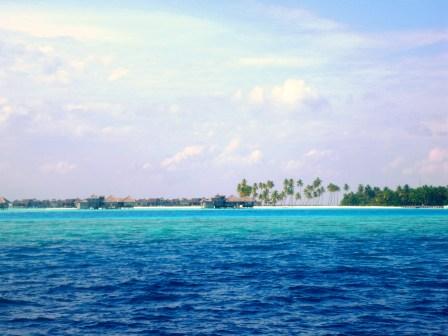
The following morning gave us this magnificent Thai sunrise, a welcoming greeting that we have taken to heart and are enjoying this land…. With many more tales to tell in the next blog (coming soon, we promise!)

Wednesday, June 2, 2010

Stories of Wilson, Gulliver and our travels

We are currently making our way across the big blue Indian Ocean to Thailand: presently half-way between Sri Lanka and Sumatra, enjoying wonderful (read: pleasant in strength and favourable in direction) winds and a current in our favour to enable brisk headway in the right direction. This history did have a little blip in it, where the winds had the right strength but pushed us south of our intended route necessitating some time to make our way back on a different tack. Then again, ahead will undoubtedly be periods of pitiful winds and uncomfortable seas.

Perspective on this: we will be content if we end up making headway at an average speed of about 5 knots… 5 nautical miles per hour. This means that we will traverse the 1500nm (just less than 3000km) from Maldives to Thailand at about the same speed that the “runner” of the family used to jog happily, namely 9km/h. Gives a lot of time to think about this turtle impersonation (im-animalisation??) we are doing, carrying our house around.

Brian, a nephew, is on board with us. Entry into any country requires you to be signed in by the skipper as crew or passenger and we can genuinely say that as crew he is wonderful (learning the sailing ropes at speed; willing, able and showing initiative in the galley; assisting with watches) and as passenger he would have cause to complain! He sacrificed leave and some pay to come and cook, clean, work… but thankfully he seems to be happy and feels that the incidental experiences (sailing across a great stretch of ocean, observing wonderful night skies, catching food, being surrounded by dolphins and …. learning the ropes) are well worth the sacrifices!

We had another passenger recently (definitely not crew). When we found ourselves underwater sawing off our rudder tops after our grounding, we discovered a 5cm long grey-brown fish fiercely protecting the starboard sail drive, which is near to the rudder. At every one of our forays into his territory he would dash out courageously and raise his dorsal fin at us menacingly, before retreating to his space under the hull having communicated his intentions. Well, he travelled with us, hence was given the name Gulliver (inspired suggestion by Geoff). For the next week he went where we went, travelling happily to several new venues and reefs… before he left us. We have no idea when or where he hopped on for the ride (Chagos? Addu Atoll? or perhaps we collided with his home reef….?) and neither do we know when he left us. However, when we returned close to where we had first discovered him we jumped in to give him our customary greeting and… he was gone. We like to believe he found a welcoming new home, as opposed to the alternative theory that he became part of the food chain. We identified him as a Drummer (Kyphosus Bigibbus…. big name for a small fish); these are apparently known to follow ships and are therefore called “rudderfish”… particularly apt in our situation!

Other things are also known to leave us summarily. Things like pegs, buckets, back-scrubbers, soap … sometimes go AWOL (the latter two during our sea-bath series). Well, when something hops off the boat there is an instant cry of “WILSON!” (remember Tom Hanks’ friend in Castaway who/which went missing?) and great efforts must be made to rescue the item (stopping short of making a Wilson of yourself when the boat is underway…).

Other things are tossed off the boat in fits of fury. Particularly eggs bought in the Maldives… which are imported from India and frequently to be found stored in the sun on the pavement patch outside a tiny messy shop. After several offensive experiences with grey, oozing specimens, the permanent crew of Ketoro tossed a dozen into the sea at the Hulhumale anchorage. Ketoro’s skipper, ever on the look-out for goods to scavenge and returning to the boat in the dinghy, was delighted to see potential scavenger-subjects floating past the dinghy. Fortunately he did NOT return gallantly with these “Wilsons”, even though they were the ones that did not explode on hitting the water…. Or he may have had egg on his face!

Skipper Rolf has, on this current passage, been close to tossing things overboard: little items like the generator, water-maker and one of the motors (or selected non-functioning parts of those machines). Two days ago all three malfunctioned simultaneously; a miserable experience on land, even less joyous when so far away from anything and pretty much dependant on these items. The first two have been repaired by our on-board mechanic; the last has a clearly dud regulator… Thank heavens this travelling house of ours is a catamaran: 2 motors and space for a generator!

So we journey with our house on our back to Thailand; the crew asked the skipper why we chose to be a turtle in our mode, rather than a hermit crab: perhaps it would be easier to simply take/borrow different houses at different lands and not do the transport ourselves? His response had to do with the strength and resourcefulness of turtles… but he noted that endless failing machinery could change his mindset.

Sunday, May 30, 2010

Living and visiting in the Maldives


Think about your country. Visualise its size and shape, its height, feel its mass, let your mind walk its earth and experience its topography: mountains and valleys, forests, deserts and waterways, cities and farmlands. Ok, so if you are Maldivian you would have finished this exercise in less than one minute and would now be going out for delicious short eats (spicy fish balls, samoosas, spring rolls) and Red Bull!


The Maldives has almost nothing above sea level: a fact that becomes apparent when cruising the atolls with a desire to ‘explore the islands’. Go there with a desire to explore underwater and you are immensely rewarded, whether snorkelling / diving one of the many famous sites of one of the largest reef systems in the world or simply exploring the drop-off or bommie closest to your boat or on the island’s house reef: vistas of stunning corals and myriads of fish in famously clear waters.


With approximately 1200 islands (to give an idea of their size, this is a variable number as the vast majority of these low lying coralline islands come and go with the waves, current and wind!…) and hundreds of un-vegetated reefs, a map shows a swathe of dots sprinkled on the big blue. The archipelago rises up dramatically from 3000m ocean floor, while between atolls the sea floor is at about 200m down and generally the depths inside the atolls are from 30 to 50m. Land heights contrast sharply with sea depths: the highest island (Hulhumale island - reclaimed land that accommodates the airport of the capital, Male) stands proud at 3m above sea level. (Atholu is the only Maldivian word that is used in the English language: “atoll” commonly used for a ring-shaped island or coral reef that surrounds a lagoon and is in turn surrounded by open sea).


The 300 000 short, slim, mild mannered, friendly Maldivians live on about 20% of the islands i.e. most of the ‘real’ islands. Many islands are merely rocks that nevertheless remain above sea level at all states of tide and are therefore counted. Resort islands dominate the country: there are more than 100 resorts in the Maldives with most of these located on their own island; each resort fills its island completely and many must spill over the adjacent sea and reef on their stilt-bungalows to offer sufficient accommodation. Tourism is the Maldives biggest (only?) income generator and Male is geared to piping in and shuffling around the thousands that come to the resorts or one of the 120 Safari boats.


Yachties, however, are not regarded as tourists worth encouraging. So cruising the Maldives is made discouragingly costly, requires a permit which takes a week to process (which week is nonetheless paid for as if cruising), limits your activities and allows the boat in the archipelago for a total of only 6 weeks. Yachties, presumably, must be kept away from locals, and evidently the resorts have influence in limiting independent yachting… as well as refusing you access to their islands. One result is that not many yachts cruise the area (we saw only 2 private boats in our two months here) and there is a dearth of useful information for cruisers.


The absence of information is at best tedious and more often, a hazardous challenge, when you are in the Maldives on your boat and need to firstly find an island where you may anchor, secondly find a passage through the fringing reef into the lagoon; then find a suitable anchorage…. in good sand / mud and in depths of about 4m to 16m… with no pilot guide and little other reference material to assist. The start of howling SW Monsoon winds at the time did little to calm matters!

In Male you anchor in Hulhumale lagoon and this is a surreal experience that has made a lasting impression. The anchorage is located at the end of the international airport’s main runway and 747s during landing and take-off are less than 200m above your head. The little twin engined seaplanes that ferry tourists between the airport and the resort hotels similarly take off and land on a strip of sheltered sea adjacent to the main runway. Dozens of Safari Boats (chartered wannabe superyachts / house boats on steroids, that accommodate about six crew and ten - twelve guests and each accompanied by its own support boat / dive boat and its dinghy) dominate the anchorage while they turn around guest parties every week or so – and the resulting boat traffic and departing / arriving guest parties adds to the air of expectancy and excitement. Then there are fuelling barges and ferries moving in and out from the jetty every 15 minutes…. and the turtle who regards us with interest as he surfaces to inhale! About 2 miles away is Male island, covered end to end with the city buildings and a few hundred metres the other way is the first of the resort islands. Between the two is the fuel island (a small island that serves as the country’s main fuel depot), the prison island, and the president’s holiday island. Anchored between all of these are over 20 large commercial ships, mostly no doubt bringing supplies to a country that can supply little of its own goods.


Examining how the people of the Maldives supply every inhabited or resort island with the facilities necessary for human habitation is fascinating, and the costs must be exorbitant. Each island has its own diesel powered generators, its own watermaking plant (usually RO systems), rubbish disposal (usually a dedicated boat, and its own sewage disposal (don’t ask). The islands are magnificent and it is little wonder that thousands of tourists fly in for a weeks’ visit…. Thank heavens they do so, for there is no other way for the Maldivians to run their lives without this income.

Male town is small, with narrow busy roads, motorbikes everywhere, beautiful mosques, interesting streets with colourful buildings and magnificent huge trees; it has a reasonable produce market (Maldivian produce only: other fresh goods can be found at the small Indian stores, mostly imported from India and Australia) and fish market (with incredible congestion in the supply harbour…) and shops that are mostly little “spaza” shops with random assortments of things, but yet also world-standard electronics shops! There are plenty of small tea houses and restaurants supplying tasty eats from cheap local to expensive foreign menus.


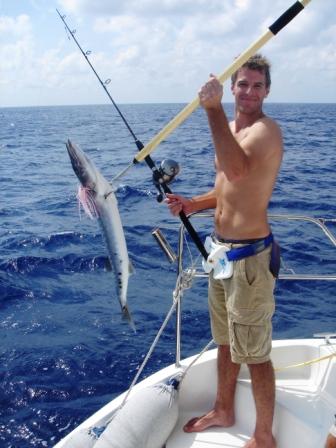


So we have experienced, in the past 2 months here (working around the “only 6 weeks maximum” rule involved a passage beyond Maldives to the ‘high seas’ and back again and some poetic license with documentation to ensure that we would be allowed to stay until the kids left ….!) very stressful times picking our way through and around bommies (small raised areas of coral rising quickly and steeply from the floor), grounding on a reef (more about that later), being refused entry to islands and unceremoniously ushered away from others, anchoring and re-anchoring to find a spot that holds and also does not cause us to swing onto bommies! Add to this the fact of no water maker for 16 days and a change of season: the SW monsoon season was heralded by regular gales and big seas. Fun times indeed to share with visitors…! This summary gives an indication of the difficulties experienced in cruising the Maldives. However, it has been a wonderful experience, particularly when shared with friends and family… and we DID see amazing sights and were warmly welcomed by some of the resort islands.

Our first taste of the archipelago (our time in the southern-most atoll, Addu) was made memorable by being the only place where land could be explored (on foot and by motorbike), with causeways joining the four islands. The anchorages on the way up to Male (referred to in a previous blog) were relatively easy and very beautiful. We have since explored the atolls of North and South Male (big tourist atolls and hence most islands have resorts on them, some more welcoming than others) and Gaafaru Atoll, our most northern anchorage. But before we did that….

We grounded the boat on a reef. Setting off from Hulhumale harbour the plan was to explore some potential anchorages on our way up to collect our first set of visitors (Geoff and Sue) where they were staying at Helengeli Island Resort. The channel into a nearby island resort area proved to be our undoing… when your draft is 1.4m and the water depth is 1.9m and then 1.4m and then 0.9m, it is too late! Well, it was for us. There are many things we did wrong, of course, to put our house on the reef, and the hideous scraping, grinding, bumping noises as it bounced up and down (rolly seas do not improve the situation) all drove the point home (simultaneously with driving the keels down hard and then, more unfortunately, driving the rudder blades up very hard.) With as much speed as possible, Irene dropped the dinghy onto the water and climbed in; there was now less weight on the back of the boat…. and we had a tool to push against the side of Ketoro and dislodge her from her perch (yeah right; and with the dinghy’s prop also hitting the rocks…). Before we could test this theory or more practically, use the dinghy to set a kedge anchor, a local dhoni (small ferry) came by and dragged us off. Well, fortunately the rudders were facing forward at the time (midships) because they were rammed up into the bottom of the hull, jamming them and resulting in our having no steering at all. The return to Hulhumale harbour was done with frayed nerves and great skill on the part of Rolf, using the engines to manoeuvre.

There are practically no repair facilities in Maldives and the rest of the day was spent underwater, first opening up a tiny gap between the hulls and the rudder blades and then getting in a saw blade to saw off the tops of the rudder blades (yes, you read that correctly) where they were jammed against the hulls, to create space between them and the hulls and thus allow the rudders to move. The deflection of the blades was presumably allowed by bending of the stainless steel rudder shafts (unlikely) and distortion of the delrin shaft bearings (probably). In any event we managed to achieve sufficient space between tops of rudders and bottom of hulls to be able to turn the wheel and steer the boat, with only moderately more effort and some notchiness in the action, and we were good to go again, which we did before daylight (and visibility) disappeared; thus after a busy day we left the atoll and sailed overnight to ensure we collected our first guests the next morning! (Replacing the rudder blades and bearings will happen in Thailand where the boat is due to be hauled out anyway for bottom painting.)


Sharing the Maldivian experience with guests


A wonderful day was spent at Helengeli resort island with Geoff and Sue, ending in a romantic dinner for 4 on the beach to celebrate our joint 32 year anniversaries (followed by their first taste of getting to and fro in the dark, rocking and rolling in the wet dinghy, using handheld GPS by torchlight to find our way round the reef: no, you cannot just head straight for the anchor light beckoning (and swaying wildly).


They then spent about 10 days with us, finding out what it is like to be on our boat. Sue’s meds enabled her to avoid sea-sickness and they enjoyed the travelling as well as the chilling out (particularly in the hammock strung beneath the trampoline - allowing bum in water and drink in hand on a very hot day!!); proved to be excellent bommie-spotters and navigators from the front of the boat when trying to find a passage through a reef or to anchor, and Geoff contributed fish to dinner admirably! We snorkeled, dived, sailed gently, visited a village and the capital city Male, and generally relaxed.


We all learned that you actually DO feel clean after sea-water baths…. Yup. Water maker broke again - on their second day with us. Man, were we disciplined: we used an average of 4 litres of fresh water pppd, including drinking water. Washing goes like this: sit on the sugar scoop (step) and wash with soap and a cup of fresh water, then jump in the sea to rinse off; turns out cheap shampoo actually lathers in sea water too. (Also turns out that long hair washed with cheap shampoo in sea water falls out at an even faster rate than normal). The naked, open air baths were made more interesting at the anchorages shared with big, lit-up Safari boats nearby. Dishes were washed in salt water and rinsed sparingly in fresh. (We now have a repaired water maker and rust on the cutlery and pots as a reminder.) Clothes washing….. none.


Gaafaru Atoll was our first port of call. Wow! With only a glimpse of a distant island, we were anchored in a lagoon bounded only by (submerged) reef. Beautiful snorkelling straight off Ketoro, and scuba diving from the dinghy at a nearby drop-off: activities that all of us enjoy tremendously and we found the coral and fish life superb. An attempt to anchor near the island and go in to the village was foiled by a fearsome barricade of bommies, making a dinghy ride too long and hence cancelled.


This was followed by several days meandering down inside North Male Atoll, with night anchorages (bath spots) either in the resort lagoons where we had received permission or in the public lagoons open to many boats. The Maldives have several renowned dive sites and we hovered in the boat near one of these while Geoff and Sue had a spectacular dive on the day of their anniversary… followed by a muffin spread for tea.


Well, 9 May was turn-around day: Geoff and Sue left us and 2 hours later the kids arrived, to be taken in the dinghy immediately to famous Banana Reef for snorkelling. Whereas G & S had experienced no weather (well, hot hot still days and calm seas) this changed on the day of their departure and the kids ushered in the start of the SW monsoon season!


So… Geoff and Sue had slept peacefully outside on the trampoline at night, with but a sheet and gentle breezes clothing them; Mark, Livi and Barry (Kay had no leave) sat whooping and cheering on the trampoline while we sailed at speed, dipping the bowsprit into the sea then lifting it to the sky, generally tossing the guys around and dowsing them with sea water (call it a bath, if you like).


The kids adapted well to the sea-bath concept and it was sometimes made even more fun when the agitated water livened up the bioluminescence so we had hundreds of sparkles around us. We ate exceptionally well and a favourite pastime was to obtain provisions from the sea while on the move: it seems the more hectic the activity the better (gutting the dorado or barracuda on the back step whilst flying forward and rocking and rolling enhances the experience it appears).


We also polished off the very last stores of boat booze: champagne and wine and whiskey saved from leaving SA 8 months ago, and the boys got opportunity to learn to love non-alcoholic Bavaria beer. Occasional trips to resort islands for a drink were enjoyed (Indians or Sri Lankans are employed at resorts to work behind the bar, open the drinks etc as Maldivians are not allowed to handle alcohol).


We sailed, rested, spent time away from any humans or land at Gaafaru, enjoyed the snorkelling and had several great dives. Ball games on / from a boat test many skills simultaneously, involving dives of a different kind… and one must be aware of the potential for guard rails to get caught in toes and other places more devastating.


There were few land trips (no land in the Maldives….!) but those we attempted were generally in a good SW Monsoon wind and seaway and so involved nimble footwork and good balance and a tolerance for wet clothes (to get into a wildly bouncing dinghy from the boat or jetty and then the reverse procedure) and often occurred at night…. Fortunately all undertaken with good humour and embracing the experience! There were several nights of playing cards/ emptying buckets of rain water into the tank/ sleeping /eating while gale-force winds tested our anchor (PAH!) and some days of motoring in same. Our children are becoming sailors!


We have a water-maker again. The necessary parts (7 small seals) arrived and needed to be fitted. Sounds simple. The job took 7 hours: 2 hours to remove the cabinet in which the pump is housed from a cramped locker in the hull and to remove the pump itself; 2 hours to open it, since every nut and bolt had “locktite” glue applied to it at manufacturing stage, in order to ensure it would never be free to open; then 3 hours to replace the seals and put it all together again (holding thumbs that the correct number of parts are found to fit the right places….). Happily, Mark was still with us as Rolf needed the extra muscle (….and brain…) so Mark’s skill set has now increased! With much trepidation the machine was turned on… and it works! However, we still have buckets at hand to catch the rain…

Saturday, April 24, 2010

A tale of two hemispheres.... or: Best-laid plans - How your world can be turned upside-down

The grib files (weather) predicted light S/SW winds for a few days, so we saw, in our heads, gentle sailing under our beautiful code zero (asymmetric spinnaker sail), a “crossing the line” ceremony that involved swimming in the deep blue sea at the equator and then smooth passage north, with appropriate anchorages for R&R planned.

So, we set off north for Male. After a rainy start the winds did as they were told and the enormous blue, red and white sail filled with wind and pulled us smoothly and quietly north under a brilliant hot blue sky. At dusk we decided to stow this sail and use the headsail and main (with one reef) rather: we have learned that in this area the squalls come up incredibly quickly and require brisk seamanship to deal with rigging; the code zero is not easy to work with in a hurry and is also a more vulnerable sail. Clever little planning sailors…. Always in control?

The skipper went off watch and all was well in the darkened cockpit. For the shortest of periods. Ketoro’s crew (shark master) has developed a reputation for calling the wind: a squall arrived and hastened things up a bit; a short time later several squalls conjoined to cause a measure of chaos in the seas that, combined with the winds, contributed to a very uncomfortable rock and roll. Called on to help put in another reef, Rolf thereafter returned to bed to await his turn on watch. And the weather for Rolf’s subsequent watch? No storm, little wind, just a wobble, roll and dawdle generally forward!
However, this was good as the time was nigh to cross the line …. a lot earlier than anticipated! So after a serious go-slow to allow Irene to sleep, at about 0620 at 00:00.000N and 73:39.670E we crossed to the other side: it was cold after the storms (JACKETS for heavens’ sake!) so our early-morning celebration saw a unanimous vote to cancel swimming and indulge in a grand culinary breakfast feast. This saw our early-morning, dry-boat-for-passage bodies plied with vodka orange/ whisky, chocolate and an apple upside-down cake Irene rustled up while rocking and rolling on midnight watch! Self-portrait below… Of course, despite the fact that we believed King Neptune to have let the team down somewhat by giving us a disrupted sea state, he was given his share in the hopes of future comforts. Ha.

Somewhat giggly and showing no respect at all to the squalls and strong west winds that persisted in coming onto her watches, Irene wanted proof of her powers of squall-summonsing in her next watch period so here is a photo taken of her radar screen. For newbies to these interpretations (as we were until recently): the purple shows anything returning the radar signal, e.g. a ship or in this case a storm. Now it could have been drizzle….. but it was not, ok!? It raged around us… luckily we were fully reefed (main and headsails) for the experience! After she got through these Irene embraced her off-watch periods with more-than-usual enthusiasm.

And so the next night rolled forward. Well … best-laid plans etc! We had originally decided to rest over on an east-side anchorage at North Huvadoo atoll, knowing that they would provide good shelter in most weather…. except strong west winds, which had not been expected! After a slow drive in the atoll, east side, we did not want to risk being blown onto a lee shore and it was too late to get to the west side (you cannot travel the atolls in the dark: the bommies will get you!). So we exited the atoll again… to spend another night on the water. Ah, how hearts can sink!

This time we hove-to outside the atoll: crash-tack sails so the boat comes to a stop / drift allowing you to get more rest than while travelling. Or so the theory goes. Irene’s watch: Rolf’s crash-tack is good but strong gusting and squally winds combine with current to get us moving at a pace faster than Rolf’s sail the previous night!! Irene got off watch, handed her crash-tack over to Rolf…. who had no winds and the most peaceful night almost stationary on the water!

The following morning saw us hauling our tired bodies off to a lovely anchorage the other side of the atoll. We were initially challenged by the fact that the chart plotter, generally very accurate, left us to our own devices in finding an anchorage: you can see that the spot where we are anchored (little boat) is apparently in a drying area! Well, happily we were very safely on water….

We became rejuvenated by a swim, great snorkel and fish lunch (rainbow runner for 2) which we got from these fishermen in exchange for cigarettes and cokes (good barter stock to have on board); we congratulated them on their sailfish (although were happy to reminisce by ourselves on the one that got away from our accidental catch in the Seychelles) and declined their turtle eggs.

A good night’s sleep saw us ready for the next leg and pulling up anchor the following day. Well, that is… until 30 seconds after starting the process! A red light fault indicator on the S/B engine sent skipper into the S/B engine compartment. Unmake the bed, throw everything (bedding, mattresses, pillows) into the hull, lift the boards and climb into the hole (sorry, engine compartment)! Office-boy Rolf is learning to be a mechanic (as well as a sailor and fisherman) and identified the problem. The photo shows the remains of the v-belt for the water pump… but does not show the bolt that was sheared off in the process of fitting new belt, nor the jerry-rigged straps to hold the system together. We eventually got going again…. and at last found the winds and conditions originally promised us!

More tiring overnight sails were alleviated by two other magnificent overnight stops, at Mulaka and Felidhe atolls, giving us a taste of the beauty of the Maldives and its potential for cruising.

So here we now sit, in the in the other hemisphere, enjoying different scenery, different aquatic life, a sky that currently has both the southern cross and the big dipper in it so we can use these tools to find where we came from and where we are going. Turns out it is lovely this side, too.

And, from the Hulhumale Lagoon (airport harbour) at the SE tip of the North Male Atoll, we wait for formalities and repairs to be completed and watch tremendous activity around us… Safari boats with their support boats with crew and guests coming and going, ferries transporting people to and from Male (in the background) and planes using the airspace directly above us and runway close by. We are making plans for the next forays into exploring the Maldives archipelago … all just plain sailing!

Tuesday, April 20, 2010

A first time for everything

Some new experiences are truly amazing once-in-a-lifetime events that live with you forever; while others are amazing more in the fact that the gods must have been smiling and ‘forever’ still has a future. Our brief time in the Chagos Archipelago and the first few days of Maldives provided a number of First Time events.

40+ knot winds at anchor

First time to experience 40+ knots of wind complete with wave slam against the bridge deck and solid water coming over the bows – whilst at anchor!! A squall had become a storm and the wind had changed direction to turn the reef into a lee shore, just as night fell. One option was to blunder around the rock and reef strewn waters in the dark during the storm, to hopefully arrive in the shelter of another island and then get the anchor set in a suitable place – all without losing body parts or expensive boat parts. That happy outcome seemed improbable. Instead, we spent an anxious night with eyes glued to GPS and hands poised over engine controls, but survived without a painful inspection of the reef and crashing surf that beckoned a few metres behind us, with nothing more serious than a caffeine hangover.

A few days later 40+ knot winds struck from dead ahead while we were travelling within the atoll under engine (we had cunningly taken down the sails when the horizon disappeared. We are getting so clever that way.) – and another first: the disconcerting experience of having both engines churning along at 2,000 rpm (about 50% power) and finding that our speed over the ground was precisely zero! Of course the catamaran is hardly the last word in sleek Italian design and it generates wind resistance like a small warehouse. It was really interesting to drive this box around in a lively sea with almost no steering – to the amused gods watching from above it must have appeared like a graceless, and rather fast, Viennese waltz. In these circumstances the skipper’s dignity was best preserved by declaring a desired course that coincided precisely with the wishes of wind and waves. It eventually needed the engines flailing away and spraying diesel with gay abandon to persuade the warehouse to see things our way.

Lots of firsts with the dinghy


Dinghy Dolphins: Playing with dolphins that break away from feeding (or playing) to accompany the dinghy and play in the bow wave or come alongside, close enough to touch. On one occasion we simply drove the dinghy backwards and forwards for a couple of kilometres each way while the dolphins took turns to come along for the ride. When we tired of this, we jumped in and swam ‘with’ them: these are incredible animals; huge and amazingly fast and graceful and intelligent. You see them actually eyeballing you in the dinghy and in the water and interacting with swimmers with their antics. This really was a rare privilege.

Dinghy Fishing: Fishing from the dinghy, with Irene trolling for fish and naturally hooking and hauling in a rather large Trevally (probably the biggest fish ever hooked by Ketoro) only to have a determined shark latch onto it and be dragged along to the side of the dinghy by our able crew – newly nicknamed sharkmonster / sharkmaster. A friend accompanying us in the dinghy patiently explained that this was our fish by repeatedly pounding the shark on the head with a gaff handle, finally dislodging it and Irene hauled in the 50% of the fish that remained. This was however not the end of it because the shark was not stupid – it knew where the fish had gone – and it tried to launch itself into the dinghy as well. We were now already three people plus a half fish and a whole lot of blood and water sloshing around in the little vessel, and the cheated shark had been joined by three more that were all loving the smell of blood. Disinclined to give up any more of our catch, or any of our own body parts, we urged the little dinghy to new fishing grounds.

These were reef sharks that we are assured are harmless! I struggle to get through the backbone of a big fish with all my weight behind a sharp knife; and this little reef shark (only about 1.2m long) ripped through this Trevally – spine and all – effortlessly. These ‘only’ reef sharks have dozens of those typical nasty triangular teeth and the same nasty eating habits and we did develop a new respect for these fellows right away.

A few minutes of fishing later a black-tip shark attacked my brand new Rapalla lure and spun it off before we could control the idiot and remove the hook. Lures are indeed precious out here, however, I considered it a reasonable outcome as I do confess some misgivings about the usual technique of removing a hook from a shark in these circumstances - three people pitching around in a little inflatable dinghy in the open ocean beyond the reef, leaking bloody water from the drain plug and no doubt under keen observation from several interested shark onlookers – who will attack their own kind without hesitation if the victim appears vulnerable (endearingly human aren’t they?). The ‘usual technique’ involves bending the shark backwards over the side of the dinghy (curiously, they generally remain fairly still once they have been persuaded into this position) and then ever so gently retrieving the precious lure – with pliers if not too deep in the mouth or by judicious gum surgery with sharp knife if deeply embedded. Shark and fisherman often go their separate ways relatively unharmed and well satisfied after such encounters.

We finally re-established our credentials by catching another Trevally and hauling it (all of it) into the boat before the sharks got close. Sharks 1: Ketoro 2. No - the first encounter was not a draw!!

Dinghy Safari – plotting the positions of a selection of bommies (submerged rock / coral pinnacles that reach almost to the surface) within the atoll and then visiting them in the dinghy, fishing en route and diving around each bommie when we get there; then onto the next one, etc. with the occasional floating refreshment stop while watching the sea life and the coral on the sea floor through 15 – 20 metres of incredibly clear water. This pleasurable pastime ends only when the beer runs out, the sunburn becomes intolerable or the light finally fades - a wonderful way to appreciate this remote, marine wilderness.

Dinghy Diving – a first for us was to dive with one of us towing the dinghy (or, depending on the current or wind, being towed by the dinghy). Previously we would anchor the boat or leave it on a nearby beach and return to it at the end of the dive. However, being attached to the vessel enabled us to range widely and freely – and of course confuse agitated sharks by miraculously disappearing from the water.

Dinghy Driving – it occurred to us that the very first time we climbed aboard a dinghy and / or started an outboard motor was when we arrived in Richards Bay after completing our maiden voyage from Cape Town. Possibly a little late to develop such basic and essential skills? Now the dinghy is ‘the car’ and it seems the most natural thing in the world to hop aboard this wet and bouncy platform and yank the outboard to life and almost never fall overboard.

Beachcombing and Salvaging

Participating in beachcombing and salvaging expeditions with a contingent of yachties armed with machetes and with acquisitive glint in the eye. Notwithstanding that the Chagos islands are hundreds of miles from anywhere, the spring tide high water mark on the outer reef beaches is defined by hundreds of plastic water bottles (what did people do before the advent of the designer water bottle?) and dozens of slip-slop sandals (the mental image of unseaworthy rustbuckets overloaded with luckless refugees is unavoidable) and other plastic stuff – mostly debris but also some semi-useful jerry cans, planks, bits of material, etc. that for some inexplicable reason assume great value, even if only until the rich haul is dragged all the way back to the yacht. At this point sanity sometimes returns and most of the stuff is promptly consigned back to the sea.

Even more cherished are the piles of fishing nets and heavy fishing lines that are washed ashore – complete with floats of different shapes and sizes, nylon cord and heavy stainless steel hooks, swivels and other fittings; just waiting to be cut up and salvaged. The jackpot however is to come upon a FAD (fish aggregating device) that has been washed ashore, complete with the floating transmitter that sends its position to its owner (a commercial fishing boat). Some of these FADs contain several dozen D-cell batteries that power the transmitter, until they are relocated into some yachtie’s torch or flashing cockpit light! It is astonishing to watch this gaggle of scruffy and ageing beachcombers descend on these modest spoils with machetes and knives – knowing that they are actually decent enough chaps and in a previous life were probably successful businessmen and pillars of respectability in their communities. And here they are, auditioning for a part in Lord of the Flies!

Fauna and Flora

Winning Ways With Weevils – since restocking in some dodgy parts of the world, before breakfast we now must first pick the weevils from the muesli. It is jolly hard to distinguish these diabolical intruders from linseeds as they keep very still when under scrutiny. We now have linseeds with legs and linseeds without legs. Linseeds without legs taste better.

Navigational Issues


Mooring in a harbour that is not a harbour. Even the largest scale chart of Gan in the Addu Atoll of Maldives – one of only four ‘ports of entry’ into the country – does not show a single harbour. Instead the charts show only fringing reefs around the islands that extend offshore for hundreds of metres. Hardwon local knowledge (and this for someone who does not – ever – ask for directions!) reveals that alongside a causeway that joins two islands, a pool within the reef - possibly enlarged by some judicious blasting and with the debris piled up on the sea side – exists a safe anchorage. A plastic bottle and a stick stuck into the rock mark a narrow passage through the reef to this sanctuary. A hungry reef on one side, a low causeway carrying road traffic on another side (punctuated by culverts that carry a powerful stream), a shallow and rocky island shore to another side and a crumbling sea wall on the fourth side. Within this little space (more than four yachts here demands close cooperation and innovative anchoring techniques) are all the facilities of a ‘port of entry’ – customs, health, immigration, coast guard, police all conveniently brought to your yacht by a coast guard patrol boat; and what’s more, it all actually works quickly and efficiently!

Four Letter Words


Yachts seem to inspire a new vocabulary of particularly noxious four-letter words, each with powerful negative connotations. The worst of these are rust and salt and hair and damp – which manifest in the most unimaginable places.

Rust - particularly on the finest, marine grade, 316 stainless steel. The marine environment is disdainful of our metallurgists’ finest efforts. Any mild steel is miraculously transformed to powder. My adjustable spanners are solidly past adjusting and my feeler gauge measures only the sum of all its leaves – a spark plug with a 10mm gap? My machete is rusted to the point that the sharp edge has simply disintegrated and the crew refers disparagingly to my butter knife. When the dive compressor is hauled out (to fill scuba tanks) and the Honda petrol engine that drives it started up (which it miraculously still does on occasion), the entire yacht is instantly covered in a plume of black particles. I understand that only some of these bits are from the exhaust blowing off its latest coating of rust – some of the particles look suspiciously like bits of engine and compressor but I cannot be sure as liberal coatings of Q20 and WD40 have congealed to prevent inspection of the substrate, even if they did not prevent it rusting. Even gelcoat and paint appear to rust!

Salt – we discovered a solid crystallisation of salt, 5mm thick, under the generator. Cooling water oozing from a strained seal? – probably - but it isn’t broke yet so it can’t get fixed yet. It is simply not possible to remove salt from some fabrics and salt is hygroscopic so the fabric never dries completely. Denims have therefore banished from the boat and donated to some hapless fisherman, to no doubt make his life equally damp and frustrating. External surfaces, especially after a few days at sea, become slippery with a damp, salt grime that causes more four letter words. On the bright side, whilst on passage a handful of table salt is obtained by the simple expedient of walking along the side deck clutching the handrail.

Hair – boats grow hair! In considerable quantity. I know this for a fact as on many occasions I have meticulously cleaned every hair from a test space (cockpit or bathroom) and then stare at a test section, defying the boat to yet again reduce my cleaning efforts to nought. And sure enough, before my eyes hairs miraculously appear on the pristine test section of floor. The hairs do not fall to the floor, they simply appear! Furthermore, the hairs cannot possibly come from us as there is so much of it that we would by now both be quite hairless. In any event at least some of the colour, length and shape variations of the offending hairs do not correspond with any known domestic specimens. There is therefore only one conclusion, the boat grows hair – proudly, defiantly, maliciously, in extravagant quantity and in bewildering array of colour, length and style!

Damp – nothing is ever really dry, least of all the crew: what with natural humidity at sea level on the equator adding to the general feeling of sticky sweatiness. Pity the yacht crews that do not have water desalinators or are unable to freely use them due to power constraints. Those unfortunate crew must rely on rainwater, or finding wells on islands, or dip into the precious stock in their tanks for everything from drinking and food preparation to washing clothes, washing dishes, washing themselves. A fresh water shower ranks up there with beer!

Beer – (in the Maldives they are strict adherents of Islam with a prohibition on alcohol). Beer must unfortunately rank amongst the foulest of these words. I slugged back the last of my precious stock while two days out from Gan harbour – confident of finding a suitable market from which to restock once we landed in the Maldives. Sadly, I appear to have misjudged the convictions of the Maldivians and am reduced to non-alcoholic beer. It is however telling that the non-alcoholic stuff is becoming increasingly palatable and even more worrisome is that the level of intelligent, or even coherent, conversation declines as rapidly as it did before!

Other - thankfully our toilets remain serviceable so we need not go there.

Crossing the Line

We finally got to cross the Equator by boat just after 6 a.m. on 13 April. A modest ration of vodka, orange and chocolate for the crew (who was on watch at the time) and several rations of whiskey and chocolate for the skipper – who heroically sacrificed his breakfast of muesli and weevils in the trade off. Ironically, after not wearing a shirt for many weeks it was on the Equator that we were in the middle of a 24 hour period of squally, stormy weather that lasted long enough to drop the temperature to shirt levels.