Langkawi Island to the east side of Borneo Island, following the Malaysian coastline, and back.
4338 nautical miles in 163 days (excluding a month in the UK).
You can play with the numbers and find that, at an average speed of 5nm per hour (very generous!), we were on the move for 867 hours, which would be 108 days on the move, assuming about 8 hours every day. More than 3 months of days just ‘getting there’. Somewhere. The next place. Half the time of BEING there was spent on the move trying to find …. Well, the next place to stop.
And those stopping places are what it is all about. They are somewhere to find food and boat necessities, sure, and they themselves are usually not a tourist attraction, but they offer the attraction of being different from what we know and full of people and shops and vehicles and food and plants and animals that are just so interesting.
Brunei
We left Sabah State (Malaysia) and sailed south into Brunei, a tiny country squeezed between Sabah and Sarawak on Borneo Island and about which we knew nothing, except for the certainty of oil riches, no booze … and that we wanted to buy cheap fuel here! With an easy river entrance (except if you don’t follow the local advice about the non-visible breakwater, and lose your rudders and props here: no, not us!) you anchor off the Royal Brunei Yacht Club and soon find that they have an excellent kitchen, inexpensive food and sell beer: the only place in the country where you can drink, so a place well-frequented by yachties and ex-pats working in the oil industry.
Brunei’s great oil wealth is legendary, but local Brunei people are hardly better off for it, as 85% of this income is in the hands of the Sultan and his family. One understands the need for this money when regarding the 33 palaces (and another under construction) and the royal collection of 4000 fancy cars (Porsche, Lamborghini, Mercedes, Ferrari, Rolls Royce, etc.).
However, the 300 000 citizens receive free health and education (albeit highly supportive of the status quo) and highly subsidised housing: this presumably compensates for the fact that their salaries are very low, thus preventing independence and personal wealth? They do have more cars per family than many other countries and the citizens appear content … perhaps because uprisings are met with alacrity and force, and we believe martial law is still in place since the 1960s. Interestingly, there are 3000 British Ghurkhas in Brunei: the Sultan’s private force, as he appears to not trust his own army or his own police.
The Sultan’s mosque, able to seat more than 3000, is awe-inspiring in its grandeur (notwithstanding the escalator for the Sultan’s personal use), with magnificent tiles, prayer-mats and voluminous spaces, while the Regalia Museum (a pictorial history of the Sultan’s life and collection of garments, carrying-sedans and gifts for his investiture) must be one of the few state museums in the world focussed on one man alone!
Mosques and palaces are always interesting, particularly when contrasted to stilted fishing villages in the river.
We happily got our jerry-cans filled with fuel (it is sold illegally to foreign yachties, and sometimes plans all fall through due to police road-blocks and checks on suppliers; the purchasing and procurement process can be a trifle fraught if you are unlucky…. hence the “happily” comment) and left the main anchorage for one in a small river further south. The river is stained dark with tannin, evidently the result of extensive logging upriver, and the yacht is still carrying these stains on its white gelcoat.
Yes, once-extensive tropical rain forests and jungles are mostly gone here too. Brunei’s oil stocks are due to be depleted by 2020 hence the focus on an alternative money-spinner: on our port side we were flanked by miles of palm plantations (for palm oil), while on our starboard side we watched construction work continue through the night and great activity from the ships that service the oil rigs.
Final Borneo visit
Heading south again, Brunei gave way to Sarawak state (Malaysian Borneo) and we headed for familiar Miri Marina to berth the boat as we flew to see some raw jungle and caves. It became quite clear why some areas of Borneo are only accessible by boat.
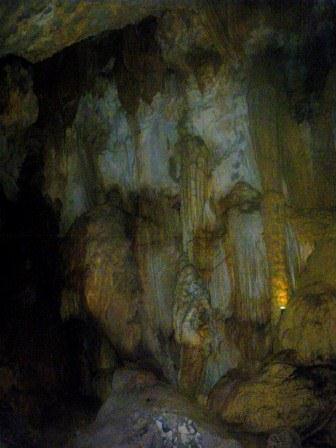
Gunung Mulu National Park is a fantastic 544 sq km wonder of nature: limestone cliffs form sharp huge pinnacles and needles 1200m above ground and the limestone base underground gives form to some of the world’s most spectacular caves…. In fact, 259 miles of them, including the world’s largest natural chamber (could accommodate 40 Boeing 747 planes) and longest underground cave passage (Planet Earth documentaries feature many of the Mulu caves’ splendours).
But the stats and accolades don’t matter - except to get visitors there, and tourism is well controlled to preserve the park’s resources, but excellently provided for. What matters is that we, who are not particularly “cave” people, enjoyed every minute (and mile…!) of our visit here.
We appreciated the size of the caves, the beauty of the cave formations and the fact that they were not permanently lit up and there was no piped background music... just the quiet sounds of millions of bats and swiftlets that take turns, day and night, in making the caves their sleeping quarters.
One of the spectacular sights in Mulu is that of millions of bats exiting the caves (black hole below) en masse at dusk …. and being swooped down upon by predator birds who await the moment.
Well, we can’t have it all: this whole area is covered by magnificent rainforest, and the awesome growth has to be supported by metres of rain annually. So, it rained that dusk and the bats stayed asleep in their warm caves, leaving us to enjoy the feel of walking back to the cottage in the dark in the close, warm rain and interpret the night sounds and sights (and watch the bat exodus on Planet Earth...)
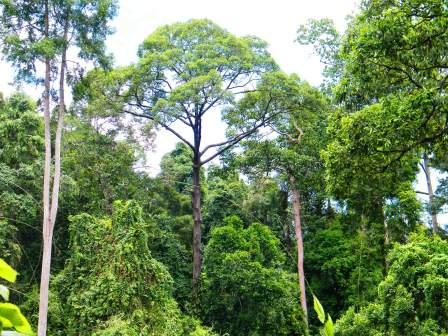
Not having been in tropical rainforest of such density before, we loved the whole experience and the beauty of the place and the incredible way that the lives of thousands of species of plants (ferns, mosses, fungi, orchids, pitchers) are interwoven with massive wonderful trees and giant lianas and provide homes for a large variety of mammals, birds, insects, fish, frogs, reptiles…
The local ethnic community, the originally-nomadic (a few hundred are still nomadic) Penan tribe, live on the river, work for the park and produce their craft (basket-, bead-and woodwork) for both tourists and themselves: many of the Park staff favour their basket backpacks over modern canvas ones for work in the rainforest.
So we walked the paths, joined the tours, enjoyed the canopy walkway and tree-top tower, and were happy and exhausted and hungry all the time!
Just… WOW. What a great trip to have as our last experience of Borneo.
And by the way, you know where to get the best carrot cake in the world? At Gunung Mulu National Park restaurant, Borneo!
Bye to Borneo
So it turns out Borneo takes the cake for nature visits: we have wonderful memories of mountain parks, rivers and jungles, rainforests; incredible under-sea vistas and marine life, interesting birds and primates endemic to Borneo.
It is also hard to beat for fascinating history and a multitude of interesting ethnic communities, some of whom still lead “primitive” lives in areas only accessible by river; it holds awesome music festivals in its forests to celebrate and perpetuate the music of international minority communities; there are towns and cities that have stimulating old streets of shops and cafes and some that have surprisingly western and modern infrastructure too: no wonder many westerners are making Borneo their home!
The best is the warmth and welcome that the local people of all communities extend to visitors. Borneo is about an intriguing past, fascinating present, and awesome natural world: it is a must-visit, and a place that, all our land-lubber lives, we had not even contemplated visiting. But we did not get to see it all! We will have to go back…
Heading to Langkawi again: with guest / passenger / crew…?
Finally leaving Borneo, we did the Miri-Singapore trip (a somewhat exhausting passage that we blurted about in the last blog), then John joined us in Singapore; the Immigration formalities proceeded without a hitch…
And we were on our way, setting off into the shipping traffic with a third hand for the 450 mile passage up the Malacca Straits to Langkawi Island at the northern end of peninsular Malaysia (border with Thailand).
Happily most of the ships immediately in the area of our boat icon in the photo above were anchored, but nonetheless they can frighten you… Irene took Ketoro right in front of an anchored behemoth, passing right under its bows (20m clearance… very stupid, really) and the crew on the bridge decided to have fun at our expense: they ‘hooted’ at us. Four massive, deep, ponderous blasts of the horn that had the effect on us of…., well, never mind, you can probably imagine the absolute fright!
So with extra hands on overnight sails we had 8 hours off between watches (not the 4 hours that we usually have, with only two on board) and we knew that we could sleep while John negotiated the traffic… at one stage there were over 100 ships with AIS signals within 3.7nm of us.
And so trusted crew-man John negotiated his way through night watches…
It really made a difference to have more hands on board: there was no debate whether John was guest or passenger or crew, he simply mucked in and worked, extending even to a bit of needlework. (For the sake of his manliness, we must sail that was SAILwork!)
We were lucky in having very calm weather: in fact, a bit short of wind and too much diesel… yachties are never happy with the wind as it is either too weak or too strong or from the wrong direction! This was a good thing the night the mainsail fell down, as it did not damage itself or any other structures as it released its purchase 19m above the deck and collapsed into its bag… somewhat astonishing Rolf, on watch!
So this necessitated a stop at anchor off Pangkor Island: very pretty, but that day not to be enjoyed as more than 3 hours were spent in fixing the problem. Rolf, spending 2 hours at the top of the mast in blazing sun in the bosuns’ chair (not designed ergonomically: it took 3 days for the old hips to re-align themselves) while the crew played their roles on deck below, did not appreciate the beauty of the island particularly as day-tripper boats created a wake fit to unnerve and unsettle, if not unseat, one.
However, melted chocolate bars and beer helped to raise spirits again, even before the harness was removed!
We checked into Malaysia again in Penang, always a fun place to see and spent two nights at rest… well, striding the streets enjoying the Colonial, Indian, Chinese and Malay heritage of Georgetown.
It seems there is nothing better (for boatie boys) than retail therapy in hardware areas like this.
We know that you think it is nothing but calm seas and sunsets and drinks on deck, so we enjoyed our last night at anchor in this beautiful “Fjord” area… (never mind that we were up and down several times worrying about our anchorage in the strong currents as the winds wailed past us..)
… and did drinks on deck just once on this trip!
We are now back in Langkawi, from where we initially set off on our trip in Malaysian waters.
It is surreal to look back at the last 6 months and 4338nm and remember the places and faces and emotions and experiences that went into that, which currently make up a kaleidoscope in our heads. Amazing. And of course, at times awful, but that all served to heighten the senses and enabled us to make the most of the good, which was ultimately fantastic!!
Now we are off to SA, to see family and friends…. Fantastic too!
Sunday, October 23, 2011
Wednesday, September 28, 2011
Crossing that sea again
It generally takes us a while to put up a blog posting, because we like to reflect on a place and how we feel about it objectively before sharing our feelings and telling the tales (alternatively, we simply didn’t get around to it earlier!)
But sometimes it is necessary to just vent!!
This is that time: exhausted, having had many intense experiences, we want to get the story off our chests and the head-pictures onto paper; so here, unpolished, is the story of our latest crossing of the South China Sea. This sea evidently has a reputation for sudden tantrums because it is fairly warm and shallow (lots of energy waiting for destructive release), compounding the usual wind and pressure factors. We were to go from Miri in Sarawak (Borneo) to Singapore across this same sea that we wrote of in “Moving House” (June). We hoped it would be a more gentle voyage and allow for more sailing; the grib weather files told us the wind would initially be “on the nose” (that’s not good) but fairly mild and then from the south (“on the beam” – that’s good). There had been a typhoon in Japan to trouble the waters but we set off on Thursday at the back end of this, knowing (!) it would clear.
We expected discomfort, so accepted it: not to say that this fact made it any less uncomfortable… we needed to get our sea legs back, clearly, and also our sea tummies! But the day passed uneventfully with our watches proceeding well; with the wind and the sea “on the nose” a bit, sails were up but it was difficult to maintain a course so we used engines as well, and went uncomfortably into the waves. Then the dolphins came. Very few things can beat the sight of a fin or two breaking the surface of the sea and coming towards your boat…. then the sight of many more as they come from all around to leap and roll and play in the bow wave of the boat. We stand or sit on the front and beam at the dolphins like idiots, certain that they turn and look at us and smile, and also certain that they are a good omen: we will make this passage.
Some time later the sea was a bit calmer, and we hoped the rest would be plain sailing. We so loved one whole day of just the sounds of the sea and the rigging, no noisy engines, and the wind speeds gave us flight. However, early the next morning an ominous, pitch black sky coming at us from the west warned us to deal with the sails (we were going to put in two reefs but during the operation at the last moment decided to drop the sail entirely) so we were reasonably prepared when this incredible black line of squalls thundered into us with their 40 knot winds. The transition from 14 knots to 40 knots is literally a few seconds. This meant that the sea was now ultra-grumpy for many hours after the storm passed and Ketoro went into them, crashing and banging, rising and falling and rolling over. We got grumpy too, but heard on the radio from friends, slightly further north than us and in stronger gusts, who ripped their main sail in the winds. We were at least intact.
So it went. Faring as well as we could, eating well and often and healthily but not gourmet stuff, sleeping on our off-watches when we could and trying to make forward progress, but frustrated at the mind-numbingly slow speeds imposed by sailing into big seas and big winds with strong current against us too. Everything was sodden: sea water came over the top of the deck and up into the windscreen, it came round the sides and saturated us and all it could find. It is difficult to describe what it is like when every surface you touch is encrusted with slippery salt grime, and that includes us too. Then the rain came from all sides and finished off the job of saturation - but at least washed off some of the salt grime. The boat inside was in as much disarray as it has ever been, with things falling and tumbling about. We have subsequently found that after the Japan typhoon, a major typhoon set up north-west of the Philippines and our weather was being affected by this.
The shipping out here was easily manageable, although it always needed careful monitoring and action: in this case the AIS triangles show 2 boats on a collision course with us (and the pink dot without triangle is a fishing boat without AIS – his speed and direction we must estimate differently). Mostly other boats see what is around and ahead of them and adjust course accordingly; sometimes we called them up by radio to ensure they had seen us and to confirm a strategy.
All passages have golden moments, and this one offered us the dolphins which came in many pods to visit us and boost our morale. The tuna also kindly gave themselves to us (5 in 3 days) so the freezer is full and we are fish-replete!
At the western side of the South China Sea are the shipping lanes providing for ordered traffic leaving and entering Singapore for or from the east (Hong Kong, Japan, China, Bangkok, etc). There are also huge areas where these giants simply anchor off to await instructions. We needed to cross these shipping lanes and had planned to get there at dawn on the Monday, cross the channel in daylight, anchor for 30 minutes nearby in order to do some necessary boat things, then set off alongside the shipping lanes to reach the marina in Singapore in the late afternoon.
Plans? Oh well. We got to the start of the shipping channel about 4am on Tuesday, having picked our way in the still-grumpy sea around the edges of the giant “car park” and (and dodging those ships that were suddenly getting underway themselves). Near the shipping channel, the storms hit; massive winds, huge rains, visibility miserable both actual and on the radar screen: all we saw was rain-reflected smudge across the screen. Excuse the terrible photo, but it gives an idea of the usefulness of the screen on the right to us... normally we would see the ships as yellow blips here!
The shipping channel is about 3 miles wide, traffic going one way down one side and the other way down the other (if you know what we mean…). We figured we would need about 40 minutes to cross (at the speed we could maintain in the current conditions), and knew that some of these ships travel at up to 24kn, so we needed the closest ship to be 3 miles away or we could not set off. That of course was for one lane; and we needed the same thing for the other lane, and the second gap needed to occur exactly when we reached the middle…
We turned round and dawdled on the outskirts, thinking to wait for the storm to pass. BUT. All shipping in the channels around Singapore are supposed to use AIS, hence we see them on the screen as little triangles pointing (mostly) in the direction they are supposedly going. We spotted a gap in the outbound traffic nearest us and a big gap the other side, so hopefully that would give us time to cross. We decided to make a run for it…. Oh my word! A fairly torrid experience, playing chicken with the big boys when you cannot see anything around you and are using your chartplotter and helm as if it is playstation… and the sea is huge and the winds come in with reinforcements when you are half way and the current is massive and it is a fight to hold your course.
But the job was done remarkably well by Rolf, and a few hours later we anchored in a bay so Irene could go up the mast and untie the Malaysian flag - it was in knots around the rope hence could not be pulled down, and we need to go into any new country with its flag and the yellow Q flag flying before we have been through immigration… certainly not flying the flag of another country! This job was achieved with ease but when we tried to pull up the anchor we could not: a long, heavy fishing line and net had been brought down in the massive current and wrapped itself around the chain. The fisherman was angry and spoke poor English; we were angry and spoke worse Bahasa Malay. Rolf tried going under water to release it but the current was so strong he could not get down and back; another option involved getting our dinghy down, pumping up its flat pontoon and dragging the other end of the net around, but that was abandoned…. The fisherman, observing our efforts and the futility of fighting nature’s whims, took out his machete and cut his net; here he is (now with two nets... or some repair work to do). We gave him a solid amount of Malaysian ringgits and he was happy… and we “raced” off for the marina, still 7 hours away.
The rest of the trip, in terms of our experience of the sea and the sailing, was calmer and less eventful: well, that would be for us. But for the two ships in an incident that happened about 100m off our starboard side it was not….
The guy on the right had hooted: we thought at us, so adjusted course… turns out he had hooted at the other ship on the left, which was simply blundering into the traffic…
They both try to turn and we watch it as if in slow motion, knowing they are not going to make it…
We see the impact and the crumpling and water pouring out and only later hear a massive boom.
They rebound off each other in a slow turn-away; they seem to take forever to stop. The whole thing seemed surreal, distant and removed due to the slow unravelling quality of the picture... but it was very close!
And it was very real; here is the damage on the one that ends up close to us: (buckled steel and pouring water apparent…. What else was wrong inside?).
(What if, at the start, the guy on the right had turned to his port (left) side?)
We raced away at the end of this episode, only able to imagine the thoughts that went through the heads of all those involved – on the bridges and down below in the ships – and also imagining the result were a small yacht to be involved in an incident like this.
Adjusting our course many times for other big guys and slowly getting to the end of our passage, we were overtaken at very close quarters by this monster;
… seeing him approaching us and unable to turn away because of oncoming vessels, we had been in awe of his bow-wave, but now we were about to be in it.
Rolf steered the boat over the waves, but nonetheless again we had water over the bow and deck… and this time, of course, the hatches had not been closed, because the seas had settled, we were in protected harbour waters, and the rain was gone and we had dried and cleaned earlier!
No matter, we were soon round the corner from “home”, and dealt with immigration in the Singapore way: this immigration boat approaches (after having been called and of course, seeing the yellow flag), you switch off and the boat drifts while your passports and papers go to the immigration guys who hold out a long-handled fish net for them. Efficient and simple... and easy for yachties.
We were accepted in, and tied up at the marina late yesterday evening; we are SO happy to be still, to catch up on lots of lost sleep… and to clean up, de-mould the boat interior, fix a torn sail (old news), stitch two broken sail pockets (again), get the generator charging problem fixed by the agent (hold thumbs - third time lucky?), shop for provisions, calculate whether we can make Malaysia before refuelling as Singapore diesel is very expensive, and meet John, who arrives soon to join us for the next leg.
But we DO have another posting to go up: on the one good passage day, I jotted into a notebook the story of our last visits in Mulu, Sarawak, and last perspectives on Borneo, which we had just left… but those thoughts need tuning and working on and polishing, not simply to be thrown and tumbled out like this… watch this space!
But sometimes it is necessary to just vent!!
This is that time: exhausted, having had many intense experiences, we want to get the story off our chests and the head-pictures onto paper; so here, unpolished, is the story of our latest crossing of the South China Sea. This sea evidently has a reputation for sudden tantrums because it is fairly warm and shallow (lots of energy waiting for destructive release), compounding the usual wind and pressure factors. We were to go from Miri in Sarawak (Borneo) to Singapore across this same sea that we wrote of in “Moving House” (June). We hoped it would be a more gentle voyage and allow for more sailing; the grib weather files told us the wind would initially be “on the nose” (that’s not good) but fairly mild and then from the south (“on the beam” – that’s good). There had been a typhoon in Japan to trouble the waters but we set off on Thursday at the back end of this, knowing (!) it would clear.
We expected discomfort, so accepted it: not to say that this fact made it any less uncomfortable… we needed to get our sea legs back, clearly, and also our sea tummies! But the day passed uneventfully with our watches proceeding well; with the wind and the sea “on the nose” a bit, sails were up but it was difficult to maintain a course so we used engines as well, and went uncomfortably into the waves. Then the dolphins came. Very few things can beat the sight of a fin or two breaking the surface of the sea and coming towards your boat…. then the sight of many more as they come from all around to leap and roll and play in the bow wave of the boat. We stand or sit on the front and beam at the dolphins like idiots, certain that they turn and look at us and smile, and also certain that they are a good omen: we will make this passage.
Some time later the sea was a bit calmer, and we hoped the rest would be plain sailing. We so loved one whole day of just the sounds of the sea and the rigging, no noisy engines, and the wind speeds gave us flight. However, early the next morning an ominous, pitch black sky coming at us from the west warned us to deal with the sails (we were going to put in two reefs but during the operation at the last moment decided to drop the sail entirely) so we were reasonably prepared when this incredible black line of squalls thundered into us with their 40 knot winds. The transition from 14 knots to 40 knots is literally a few seconds. This meant that the sea was now ultra-grumpy for many hours after the storm passed and Ketoro went into them, crashing and banging, rising and falling and rolling over. We got grumpy too, but heard on the radio from friends, slightly further north than us and in stronger gusts, who ripped their main sail in the winds. We were at least intact.
So it went. Faring as well as we could, eating well and often and healthily but not gourmet stuff, sleeping on our off-watches when we could and trying to make forward progress, but frustrated at the mind-numbingly slow speeds imposed by sailing into big seas and big winds with strong current against us too. Everything was sodden: sea water came over the top of the deck and up into the windscreen, it came round the sides and saturated us and all it could find. It is difficult to describe what it is like when every surface you touch is encrusted with slippery salt grime, and that includes us too. Then the rain came from all sides and finished off the job of saturation - but at least washed off some of the salt grime. The boat inside was in as much disarray as it has ever been, with things falling and tumbling about. We have subsequently found that after the Japan typhoon, a major typhoon set up north-west of the Philippines and our weather was being affected by this.
The shipping out here was easily manageable, although it always needed careful monitoring and action: in this case the AIS triangles show 2 boats on a collision course with us (and the pink dot without triangle is a fishing boat without AIS – his speed and direction we must estimate differently). Mostly other boats see what is around and ahead of them and adjust course accordingly; sometimes we called them up by radio to ensure they had seen us and to confirm a strategy.
All passages have golden moments, and this one offered us the dolphins which came in many pods to visit us and boost our morale. The tuna also kindly gave themselves to us (5 in 3 days) so the freezer is full and we are fish-replete!
At the western side of the South China Sea are the shipping lanes providing for ordered traffic leaving and entering Singapore for or from the east (Hong Kong, Japan, China, Bangkok, etc). There are also huge areas where these giants simply anchor off to await instructions. We needed to cross these shipping lanes and had planned to get there at dawn on the Monday, cross the channel in daylight, anchor for 30 minutes nearby in order to do some necessary boat things, then set off alongside the shipping lanes to reach the marina in Singapore in the late afternoon.
Plans? Oh well. We got to the start of the shipping channel about 4am on Tuesday, having picked our way in the still-grumpy sea around the edges of the giant “car park” and (and dodging those ships that were suddenly getting underway themselves). Near the shipping channel, the storms hit; massive winds, huge rains, visibility miserable both actual and on the radar screen: all we saw was rain-reflected smudge across the screen. Excuse the terrible photo, but it gives an idea of the usefulness of the screen on the right to us... normally we would see the ships as yellow blips here!
The shipping channel is about 3 miles wide, traffic going one way down one side and the other way down the other (if you know what we mean…). We figured we would need about 40 minutes to cross (at the speed we could maintain in the current conditions), and knew that some of these ships travel at up to 24kn, so we needed the closest ship to be 3 miles away or we could not set off. That of course was for one lane; and we needed the same thing for the other lane, and the second gap needed to occur exactly when we reached the middle…
We turned round and dawdled on the outskirts, thinking to wait for the storm to pass. BUT. All shipping in the channels around Singapore are supposed to use AIS, hence we see them on the screen as little triangles pointing (mostly) in the direction they are supposedly going. We spotted a gap in the outbound traffic nearest us and a big gap the other side, so hopefully that would give us time to cross. We decided to make a run for it…. Oh my word! A fairly torrid experience, playing chicken with the big boys when you cannot see anything around you and are using your chartplotter and helm as if it is playstation… and the sea is huge and the winds come in with reinforcements when you are half way and the current is massive and it is a fight to hold your course.
But the job was done remarkably well by Rolf, and a few hours later we anchored in a bay so Irene could go up the mast and untie the Malaysian flag - it was in knots around the rope hence could not be pulled down, and we need to go into any new country with its flag and the yellow Q flag flying before we have been through immigration… certainly not flying the flag of another country! This job was achieved with ease but when we tried to pull up the anchor we could not: a long, heavy fishing line and net had been brought down in the massive current and wrapped itself around the chain. The fisherman was angry and spoke poor English; we were angry and spoke worse Bahasa Malay. Rolf tried going under water to release it but the current was so strong he could not get down and back; another option involved getting our dinghy down, pumping up its flat pontoon and dragging the other end of the net around, but that was abandoned…. The fisherman, observing our efforts and the futility of fighting nature’s whims, took out his machete and cut his net; here he is (now with two nets... or some repair work to do). We gave him a solid amount of Malaysian ringgits and he was happy… and we “raced” off for the marina, still 7 hours away.
The rest of the trip, in terms of our experience of the sea and the sailing, was calmer and less eventful: well, that would be for us. But for the two ships in an incident that happened about 100m off our starboard side it was not….
The guy on the right had hooted: we thought at us, so adjusted course… turns out he had hooted at the other ship on the left, which was simply blundering into the traffic…
They both try to turn and we watch it as if in slow motion, knowing they are not going to make it…
We see the impact and the crumpling and water pouring out and only later hear a massive boom.
They rebound off each other in a slow turn-away; they seem to take forever to stop. The whole thing seemed surreal, distant and removed due to the slow unravelling quality of the picture... but it was very close!
And it was very real; here is the damage on the one that ends up close to us: (buckled steel and pouring water apparent…. What else was wrong inside?).
(What if, at the start, the guy on the right had turned to his port (left) side?)
We raced away at the end of this episode, only able to imagine the thoughts that went through the heads of all those involved – on the bridges and down below in the ships – and also imagining the result were a small yacht to be involved in an incident like this.
Adjusting our course many times for other big guys and slowly getting to the end of our passage, we were overtaken at very close quarters by this monster;
… seeing him approaching us and unable to turn away because of oncoming vessels, we had been in awe of his bow-wave, but now we were about to be in it.
Rolf steered the boat over the waves, but nonetheless again we had water over the bow and deck… and this time, of course, the hatches had not been closed, because the seas had settled, we were in protected harbour waters, and the rain was gone and we had dried and cleaned earlier!
No matter, we were soon round the corner from “home”, and dealt with immigration in the Singapore way: this immigration boat approaches (after having been called and of course, seeing the yellow flag), you switch off and the boat drifts while your passports and papers go to the immigration guys who hold out a long-handled fish net for them. Efficient and simple... and easy for yachties.
We were accepted in, and tied up at the marina late yesterday evening; we are SO happy to be still, to catch up on lots of lost sleep… and to clean up, de-mould the boat interior, fix a torn sail (old news), stitch two broken sail pockets (again), get the generator charging problem fixed by the agent (hold thumbs - third time lucky?), shop for provisions, calculate whether we can make Malaysia before refuelling as Singapore diesel is very expensive, and meet John, who arrives soon to join us for the next leg.
But we DO have another posting to go up: on the one good passage day, I jotted into a notebook the story of our last visits in Mulu, Sarawak, and last perspectives on Borneo, which we had just left… but those thoughts need tuning and working on and polishing, not simply to be thrown and tumbled out like this… watch this space!
Saturday, September 10, 2011
The Borneo voyage continues
The surface of the Celebes (Sulawesi) Sea hides a curve of land stretching about 30 miles roughly west-east. In a few isolated places the land lifts its head above the sea but it occurs mostly as reef below the surface (olive patches in the chart below). Head your boat southwards (on the safe blue patches) and watch the depth reading as it changes dramatically from less than 10m to more than 500m: you have driven over the drop-off of the reef, a wall that plummets to the sea bottom along the length of this land. Continue and the sea bed gradually drops to well over a kilometre, then rises to 700m and Pulau Sipadan, a tiny rainforest-covered tropical island, suddenly appears from the abyss. This area is under-water heaven: the Indo-Pacific basin is the richest marine habitat in the world, a centre of marine bio-diversity, and P Sipadan is one of the world’s top dive sites… a marine reserve where the range and variety and numbers of marine life is astounding.
But we are getting ahead of ourselves.The last stop of the Sail Malaysia Rally was Tawau - a functional town if ever there was one, but they had more fish at their market than we have seen anywhere else; asked where they obtained their fish, as stocks are dwindling throughout Asia, their terrifying answer was “night fishing off Pulau Sipadan”! Here we got another introduction to bad Malaysian anchorages: strong currents and strange eddies in which boats moved around in unpredictable fashion and poor holding in thin, soft mud. On our second night there were only two yachts; a storm blew up and a very disorientated Ketoro crew woke in shock with sirens directly behind us and bright spotlights on our rocking, rolling boat... provided by the other boat that was being blown and pushed down onto us and only metres away! We survived that heart-stopping experience but it set a trend for anchorages over the next few weeks: there was not to be peaceful sleep for some time!
Into this space came Geoff, Sue and Nikki Candy, our guests for about two weeks, who had come to experience the diving with us and also some Borneo land travel.
On a previous visit to Ketoro (in the Maldives) their mettle was tested by having no fresh water on board (water-maker was broken); this time we had water (although the normal boating restrictions applied, particularly with 5 sharing the facilities and resources) but no battery charging from the generator and furthermore, we had sliced a hole in the inflatable dinghy on the non-dinghy-friendly jetty of the Tawau Yacht Club, which we were unable to fix. The dinghy is our car, our means to get anywhere from the boat… critical! Rolf’s many attempts at repairs had all failed (quite hard to keep all those little air molecules trapped inside!) but he got it to a stage where, with big pump on board, you could pump up the offending pontoon as you travelled (and were we imagining it, or did the escaping bubbles give us a touch more speed in our progress, albeit in circles!?).
Night 1 at sea was on Horn Reef (left red X in chart photo) where we saw nothing but a single stilted home of a fisherman above the water, while underwater there was coral and fish we had not seen before: an auspicious start to the marine promise of the area.
As much as the dinghy problems were out of our control, so too was the endless set of lessons then forced on our guests in “the ups and downs (challenges and headaches) of anchoring”. Night 2 saw us off Pulau Mabul (second set of red crosses in chart above), with the anchor happily ensconced in good white sand near some lovely bommies at the end of a resort jetty, and planned so that dawn would see us wiping the sleep out of our eyes with a refreshing snorkel from the back steps.
Not to be… that was the first storm night. The storm arrived at about 2am and whipped up the sea; resulting in us scurrying around ensuring all was safely stowed and closed, then checking the instruments to see if the boat anchor was holding. A few further attempts at shut-eye were futile, as we saw that the boat was slowly but surely being dragged from its initial anchoring position. On this occasion, being dragged was not a crisis as it was away from shallow areas and there were no boats near us, but necessitated a move to new anchorage the next day.
Night 2 at Mabul came and… so did a storm. The previous night’s checks were repeated, and she was firm. Well, what that means is that our anchor was not dragging... Ketoro was CERTAINLY not firm!! Our new position gave us the dubious joy of a variety of large swells, reflected round the sides of the island, meaning: roll to left, roll to right, slam forward and backward and… repeat! We had this dance nightly for the next three days, and the only thing that dragged was our bodies as we tried to get them out of bed in the mornings after the disturbed nights!
Amazingly, the days were lovely and allowed us to enjoy them fully… despite the fact that (as we subsequently learned) the weather was due to a “super typhoon” over the Philippines. Those days saw us being collected by a dive boat and being taken for two day trips, with three dives each day. Diving at Mabul and nearby Kapalai was a wonderful day; diving at Sipadan took our breath away…
The island is a tiny tropical paradise: a dense deep-green rainforest that is fringed by sparkling white sand; stroll into the turquoise water until knee deep and suddenly the ground gives way to a 600m drop-off. Diving alongside this wall is astounding: look up and see turtles gracefully swimming way above you, a reef shark searching for tasty morsels above or alongside you, large predators searching for their meals; along the wall, a diverse range of spectacular healthy coral of vibrant colours and sizes hosts millions of marine creatures, while hundreds of fish continue their lives unconcerned by your presence. Look straight down… and wonder at what else the further 575m beneath may hold!
We saw huge shoals of fish, a tornado of barracuda, incredible huge individuals and the tiniest, brightest-coloured or most odd creatures. Thank heavens Geoff had an underwater camera with him... all these photos are his handiwork.
The wall holds secrets: a series of caves where turtles over the ages (and a few divers) have become disorientated and drowned; it provides ledges and small caves where you come upon sharks or turtles resting, and you need eagle (or a predator’s?) eyes to distinguish some of the creatures (like the "sea dragon" in this photo, on the right) from the corals in which they are hiding.
On each occasion we came up from the depths filled with awe, with every expectation having being met. This experience was incredible and we felt very privileged to have been here…. and very sorry that we had only a day scheduled at this particular island!
The conservation of this marine park area is managed very carefully and the numbers of divers per day is strictly limited to 120. There was also once trouble in paradise (in 2000, a Philippine terrorist group, the Abu Sayyaf, took tourists hostage from Sipadan Island), resulting in the few resorts on this remote island being closed down and dive operators having to function from afar, each operator only given a certain number of permits per week.
Illegal Indonesians and Philippines appear to threaten the safety of life on this coast of Borneo Malaysia: the police believed that such outsiders were the culprits in the burglaries on our 3 rally boats as well as another 3 yachts that were burgled at another anchorage. We regularly saw the Malaysian Marine forces patrolling the waters, mooring near our boats or calling us up when on passage; although locals laugh and believe they are ineffective - we enjoyed the visual deterrent of them being near us. Some rally boats went no further than the top of Borneo Island, not venturing down this east side at all as their insurers did not cover them in this area.
After a champagne dinner to celebrate our Sipadan dive day, it was time to move on… but not so fast: first there was another anchoring lesson and test.Trying to lift anchor from our hold-fast-in-Mabul spot, she was stuck FAST: no wonder we did not drag! However, a chain that will not lift is an unhappy situation, and the anchor was 16m below us, so Rolf had to don scuba gear, Geoff his snorkel gear for surface work and to convey progress reports and instructions, and Irene had to drive the boat to get the anchor chain dislodged.
Mission accomplished, and we said farewell to Mabul, moving on to a beautiful forested island further north that rose high from the sea, just to show our friends that there is land above the water too.
Sea travel in Asia is interesting because of the variety of fascinating fishing villages and boats seen on the water.
Taking the Candys to Lahad Datu where we were to abandon them to their own explorations of orang-utans, proboscis monkeys and other strange and lovely creatures endemic to Borneo in the jungle along the Kinabatangan River (and see for themselves the massively encroaching palm oil plantations: see our previous blog), we saw another different fishing structure: what we believe to be a small shrimp-fishing village that is moved between fishing grounds by being pushed by a small motorised craft, then anchors until those grounds are depleted.
We spent three days sailing Ketoro to Sandakan, where we met our friends again. Sandakan was established in the 1870s when a Scottish adventurer delivered guns to the Sultan of Sulu who … basically gave it to him as a base. The town grew but then “ceased to exist” as a town after WW2, when it was flattened by the Allied forces in an effort to liberate it from the Japanese, and subsequently the rest was burned down by the Japanese. However, there are some lovely excursions: the self-guided trails of the Rainforest Discovery Centre gave us all a chance to enjoy the sights of rare plants and birds, endemic to Borneo; giant and tiny squirrels, and flying lizards (seen below, wings in but giving a display of aggression), often seen from the canopy walkway at the top of this magnificent forest.
Most oddly, the town has an English Country Tea Garden in the grounds of the home of the British Conservator of Forests and his wife: tea and scones in Borneo overlooking the grubby, ugly city seems strange… but lift your eyes and see over the large bay to rolling hills and forests the other side… and wonder at what is hiding away! Agnes Keith, the authoress wife, wrote “Land below the Wind”, her story of Borneo, the island that does not become beset by the terrible typhoons and storms that pummel the Philippines: well, maybe they do not lay siege to Borneo but we now know that this island feels the edges of those storms, and sometimes friends visiting yachts are subject to these trials to give them a taste of one aspect of this cruising life! With the visitors departed, it was time for us to set off back around the top of Borneo and start on a long return journey. We gave ourselves a treat at the start:
Lankayan Island is a marine park and resort with a wonderful turtle conservation programme, monitoring the many turtles that lay eggs on their island, collecting the eggs and placing the hatchlings into the sea. With two nights firmly attached to their mooring buoy, we had the privilege of seeing about 300 baby turtles being introduced to their new watery home (unfortunately also witnessing some of the little creatures becoming tasty morsels) and also watched a huge green turtle digging a massive hole in the dark. After more than an hour, she gave up on one hole as it had too many roots and moved to start on another; we left to return to our boat and a good sleep (no fears of dragging nor struggling with anchors!) and heard that she finally laid her eggs into her fourth hole.
On the dive the following day, we looked at the turtles with renewed respect and understanding of their trials … and are in awe of the fact that any survive at all. Borneo has a way of making one very aware of the balance of life and how tenuous so much of our world’s heritage really is.
But we are getting ahead of ourselves.The last stop of the Sail Malaysia Rally was Tawau - a functional town if ever there was one, but they had more fish at their market than we have seen anywhere else; asked where they obtained their fish, as stocks are dwindling throughout Asia, their terrifying answer was “night fishing off Pulau Sipadan”! Here we got another introduction to bad Malaysian anchorages: strong currents and strange eddies in which boats moved around in unpredictable fashion and poor holding in thin, soft mud. On our second night there were only two yachts; a storm blew up and a very disorientated Ketoro crew woke in shock with sirens directly behind us and bright spotlights on our rocking, rolling boat... provided by the other boat that was being blown and pushed down onto us and only metres away! We survived that heart-stopping experience but it set a trend for anchorages over the next few weeks: there was not to be peaceful sleep for some time!
Into this space came Geoff, Sue and Nikki Candy, our guests for about two weeks, who had come to experience the diving with us and also some Borneo land travel.
On a previous visit to Ketoro (in the Maldives) their mettle was tested by having no fresh water on board (water-maker was broken); this time we had water (although the normal boating restrictions applied, particularly with 5 sharing the facilities and resources) but no battery charging from the generator and furthermore, we had sliced a hole in the inflatable dinghy on the non-dinghy-friendly jetty of the Tawau Yacht Club, which we were unable to fix. The dinghy is our car, our means to get anywhere from the boat… critical! Rolf’s many attempts at repairs had all failed (quite hard to keep all those little air molecules trapped inside!) but he got it to a stage where, with big pump on board, you could pump up the offending pontoon as you travelled (and were we imagining it, or did the escaping bubbles give us a touch more speed in our progress, albeit in circles!?).
Night 1 at sea was on Horn Reef (left red X in chart photo) where we saw nothing but a single stilted home of a fisherman above the water, while underwater there was coral and fish we had not seen before: an auspicious start to the marine promise of the area.
As much as the dinghy problems were out of our control, so too was the endless set of lessons then forced on our guests in “the ups and downs (challenges and headaches) of anchoring”. Night 2 saw us off Pulau Mabul (second set of red crosses in chart above), with the anchor happily ensconced in good white sand near some lovely bommies at the end of a resort jetty, and planned so that dawn would see us wiping the sleep out of our eyes with a refreshing snorkel from the back steps.
Not to be… that was the first storm night. The storm arrived at about 2am and whipped up the sea; resulting in us scurrying around ensuring all was safely stowed and closed, then checking the instruments to see if the boat anchor was holding. A few further attempts at shut-eye were futile, as we saw that the boat was slowly but surely being dragged from its initial anchoring position. On this occasion, being dragged was not a crisis as it was away from shallow areas and there were no boats near us, but necessitated a move to new anchorage the next day.
Night 2 at Mabul came and… so did a storm. The previous night’s checks were repeated, and she was firm. Well, what that means is that our anchor was not dragging... Ketoro was CERTAINLY not firm!! Our new position gave us the dubious joy of a variety of large swells, reflected round the sides of the island, meaning: roll to left, roll to right, slam forward and backward and… repeat! We had this dance nightly for the next three days, and the only thing that dragged was our bodies as we tried to get them out of bed in the mornings after the disturbed nights!
Amazingly, the days were lovely and allowed us to enjoy them fully… despite the fact that (as we subsequently learned) the weather was due to a “super typhoon” over the Philippines. Those days saw us being collected by a dive boat and being taken for two day trips, with three dives each day. Diving at Mabul and nearby Kapalai was a wonderful day; diving at Sipadan took our breath away…
The island is a tiny tropical paradise: a dense deep-green rainforest that is fringed by sparkling white sand; stroll into the turquoise water until knee deep and suddenly the ground gives way to a 600m drop-off. Diving alongside this wall is astounding: look up and see turtles gracefully swimming way above you, a reef shark searching for tasty morsels above or alongside you, large predators searching for their meals; along the wall, a diverse range of spectacular healthy coral of vibrant colours and sizes hosts millions of marine creatures, while hundreds of fish continue their lives unconcerned by your presence. Look straight down… and wonder at what else the further 575m beneath may hold!
We saw huge shoals of fish, a tornado of barracuda, incredible huge individuals and the tiniest, brightest-coloured or most odd creatures. Thank heavens Geoff had an underwater camera with him... all these photos are his handiwork.
The wall holds secrets: a series of caves where turtles over the ages (and a few divers) have become disorientated and drowned; it provides ledges and small caves where you come upon sharks or turtles resting, and you need eagle (or a predator’s?) eyes to distinguish some of the creatures (like the "sea dragon" in this photo, on the right) from the corals in which they are hiding.
On each occasion we came up from the depths filled with awe, with every expectation having being met. This experience was incredible and we felt very privileged to have been here…. and very sorry that we had only a day scheduled at this particular island!
The conservation of this marine park area is managed very carefully and the numbers of divers per day is strictly limited to 120. There was also once trouble in paradise (in 2000, a Philippine terrorist group, the Abu Sayyaf, took tourists hostage from Sipadan Island), resulting in the few resorts on this remote island being closed down and dive operators having to function from afar, each operator only given a certain number of permits per week.
Illegal Indonesians and Philippines appear to threaten the safety of life on this coast of Borneo Malaysia: the police believed that such outsiders were the culprits in the burglaries on our 3 rally boats as well as another 3 yachts that were burgled at another anchorage. We regularly saw the Malaysian Marine forces patrolling the waters, mooring near our boats or calling us up when on passage; although locals laugh and believe they are ineffective - we enjoyed the visual deterrent of them being near us. Some rally boats went no further than the top of Borneo Island, not venturing down this east side at all as their insurers did not cover them in this area.
After a champagne dinner to celebrate our Sipadan dive day, it was time to move on… but not so fast: first there was another anchoring lesson and test.Trying to lift anchor from our hold-fast-in-Mabul spot, she was stuck FAST: no wonder we did not drag! However, a chain that will not lift is an unhappy situation, and the anchor was 16m below us, so Rolf had to don scuba gear, Geoff his snorkel gear for surface work and to convey progress reports and instructions, and Irene had to drive the boat to get the anchor chain dislodged.
Mission accomplished, and we said farewell to Mabul, moving on to a beautiful forested island further north that rose high from the sea, just to show our friends that there is land above the water too.
Sea travel in Asia is interesting because of the variety of fascinating fishing villages and boats seen on the water.
Taking the Candys to Lahad Datu where we were to abandon them to their own explorations of orang-utans, proboscis monkeys and other strange and lovely creatures endemic to Borneo in the jungle along the Kinabatangan River (and see for themselves the massively encroaching palm oil plantations: see our previous blog), we saw another different fishing structure: what we believe to be a small shrimp-fishing village that is moved between fishing grounds by being pushed by a small motorised craft, then anchors until those grounds are depleted.
We spent three days sailing Ketoro to Sandakan, where we met our friends again. Sandakan was established in the 1870s when a Scottish adventurer delivered guns to the Sultan of Sulu who … basically gave it to him as a base. The town grew but then “ceased to exist” as a town after WW2, when it was flattened by the Allied forces in an effort to liberate it from the Japanese, and subsequently the rest was burned down by the Japanese. However, there are some lovely excursions: the self-guided trails of the Rainforest Discovery Centre gave us all a chance to enjoy the sights of rare plants and birds, endemic to Borneo; giant and tiny squirrels, and flying lizards (seen below, wings in but giving a display of aggression), often seen from the canopy walkway at the top of this magnificent forest.
Most oddly, the town has an English Country Tea Garden in the grounds of the home of the British Conservator of Forests and his wife: tea and scones in Borneo overlooking the grubby, ugly city seems strange… but lift your eyes and see over the large bay to rolling hills and forests the other side… and wonder at what is hiding away! Agnes Keith, the authoress wife, wrote “Land below the Wind”, her story of Borneo, the island that does not become beset by the terrible typhoons and storms that pummel the Philippines: well, maybe they do not lay siege to Borneo but we now know that this island feels the edges of those storms, and sometimes friends visiting yachts are subject to these trials to give them a taste of one aspect of this cruising life! With the visitors departed, it was time for us to set off back around the top of Borneo and start on a long return journey. We gave ourselves a treat at the start:
Lankayan Island is a marine park and resort with a wonderful turtle conservation programme, monitoring the many turtles that lay eggs on their island, collecting the eggs and placing the hatchlings into the sea. With two nights firmly attached to their mooring buoy, we had the privilege of seeing about 300 baby turtles being introduced to their new watery home (unfortunately also witnessing some of the little creatures becoming tasty morsels) and also watched a huge green turtle digging a massive hole in the dark. After more than an hour, she gave up on one hole as it had too many roots and moved to start on another; we left to return to our boat and a good sleep (no fears of dragging nor struggling with anchors!) and heard that she finally laid her eggs into her fourth hole.
On the dive the following day, we looked at the turtles with renewed respect and understanding of their trials … and are in awe of the fact that any survive at all. Borneo has a way of making one very aware of the balance of life and how tenuous so much of our world’s heritage really is.
Monday, August 15, 2011
A Race, a Mountain, a Lot of Trouble and a River
Since our last blog, we have been in a Race (the Borneo International Yacht Challenge, whee haa!!), into a wonderful mountain nature reserve (Mount Kinabalu), had a period with an awful lot of troubles, and been up a lovely river (Sungai Kinabatangan). So that’s what this next story is all about….
A Race….. The Borneo International Yacht Challenge (BIYC)
(Also entitled: Much Ado About Nothing…. Or, getting long-winded about being short of wind)
The BIYC is an annual yachting series that takes place with short inshore races in Miri and Kota Kinabalu(KK) and a long offshore race between these two cities of the states Sarawak and Sabah. Cruisers participating in the Sail Malaysia Rally are cajoled into joining to swell the numbers because, although there are some strong entrants (ie real racers) to these races (maybe…. 2?), there are so few it would be an embarrassment to the organisers. In this case, “cajole” means give dinners and a free night in a hotel…. So cruising yachties are THERE!!
In fact, even amongst our rally group there are some country-record holders (and a world..... the guys with the long-drop toilet, from the last blog!). These guys all took it seriously, unpacking all they could from their boats to have it transported overland to KK for collection after racing was finished. Not for them, racing with the extra weight of a dinghy, generator, washing machine, 8 jerry cans of extra fuel / water, compressor, dive tanks..!
Well, what a learning experience this all was for us, the Ketoro crew. These are SAILING races. Not motoring. No engines allowed. But wind is required to sail, and there was no wind. We on Ketoro like wind, and if there is no wind, we have two engines which we usually use...
Day 1.... Round-the-buoys race just outside the Miri Marina. Boats had to go off in batches, according to class, with catamarans in the second batch, 5 min between batches. Imagine 40 boats milling around and meandering in and out of others’ way to get themselves in a good place to speed off at the start but not bashing into each other. And 4 min from the start no engines allowed. And no wind.
Ketoro crew had as biggest concerns...1: don't bash people, 2: don't get in the way of a serious fellow and be called in front of the committee in protest. So our strategy was to start at the back of our group. Therefore we were some way back (and very far from the start line) when we got the 4 minute signal - and switched off engines. In our cruising, we have never practised getting somewhere under sail with no wind (rule has always been to switch on engines at 4 knots or slower), so it was with great interest we found that.... You don't. Or rather, it is excruciatingly slow.
The summary of this race is as follows: call was given for multihull engines to go off and start approaching the start line; Ketoro sits like a sloth in the water; Ketoro reaches the start line 15 minutes later, then the tide almost pushes her into collision with the starter boat / committee boat at the start line (no wind to use to get away); Ketoro happily retires from the race when other cruisers start calling in the same intention. Go get a beer.
Day 2.... 170 mile race from Miri to KK. In these passage races, you may start your engines 30 minutes after the start, but incur penalties, and must write down on-and-off times and positions very diligently to hand in to the organisers at the end. Sailors try not to motor at all; we had 48 hours to get to KK.
Picture the start... As before, but this time we were EXPERIENCED! So this time it only took us about 5 minutes to get to the start line, and we were off (well, snail-style), jostling for position with these two boats.
Actually, there was a tiny amount of wind so we made as much use as we could of it, as did most (although some started their engines at 30 minutes and switched off when they got to KK). Ultimately, we sailed for 8.5 hours in total, at a speed of at best 4 knots: however, that also included current of 1.5 knots taking us in the right direction, so you can see the wind was almost zero.
Two good things... we caught a great 3 foot plus Spanish Mackerel that fed us for ages, and also we have learned a fair amount about what we CAN do with the boat with no wind, which we had never allowed ourselves the chance to attempt. However, after a while you throw in the towel to keep your sanity, so we then motor- sailed another 18 hours to the end, as fast as we could … got in exhausted and exceedingly hot, with blinding headache.
Now we come to the funny bit…. We came second in this passage race!!! Nobody was more surprised than us, but some of the big guys gave up on the no wind and went shopping at a duty-free island en route, and it seems we actually sailed quite well too! Interestingly, one of those that shed load and boat contents to keep boat weight down, also discarded almost all his fuel... Resulting in them running out of fuel, and another boat sailing at the back (also a serious racer) having to wait and help them out.
The rest of the races at KK were an echo of day 1 (short races, no wind…) so we decided we had found our niche…. Long distance… and would sit those out!
A Mountain: Mount Kinabalu National Park
So the race had taken us to Kota Kinabalu (KK, in Sabah state), a city with nothing to show of its history since it had been flattened almost entirely during WWII.
Enjoying a free few days at its nice (expensive) marina, we took a trip into Borneo nostalgia on the recently-refurbished North Borneo vintage train pulled by a British Vulcan steam engine and were treated to a wonderful evening show displaying the cultural dances of the local minority groups.
KK is a base to visit what Sabah state offers best: nature. With a climb to the summit of Mount Kinabalu being deemed too expensive, we hired a car and wound our way up through the lush countryside to spend a few days in the reserve on the slopes of this famous mountain.
Mount Kinabalu has many peaks, but the summit stands at 4095m, the highest peak in SE Asia.
Kinabalu Park is a 750 sq km ecological paradise with over 1000 species of orchids amongst other beautiful flowering plants, weird pitcher plants, magnificent oaks and chestnut trees supporting diverse mammal, bird and insect populations, many of them being endemic to Borneo. The park is set up with lots of interleaving trails that allow you to hike as little (Rolf) or as much (Irene) as you want…. Or somewhere in the middle!! And one of the best things about the park?.... the temperature!! It is a cool 20 degrees!
Many of our cruising friends are Australian, and Borneo houses much important and poignant WWII history for them; thus it was that while we were in the area we went with some to the Kundesang War Memorial, which taught us about three terrible and infamous 160 mile death marches in which 2428 Australian and British POWs died.
A Lot Of Trouble: boat bothers and a burglary
There is a mantra in cruising that says: Don’t make plans, because they will not work out. Well, we continue to challenge this …. And have again been taught the lesson!
We left KK with a week-long trip to Sandakan (also in Sabah state)to look forward to, entering the Sulu Sea on the east of Borneo for the first time, in which we were going to sail manageable legs daily, anchor and rest and mostly MAKE BIG DECISIONS AND PLANS ABOUT OUR SAILING IN THE SHORT- AND LONG TERM.
With such anticipation, we set off and were not too disturbed when on the first evening we could not drop the mainsail, eventually managed (much associated stress) and Irene spent the last few hours of daylight up the mast doing repair work.
On the second day we were more disturbed when the water pump of one engine died and we had to get much further than anticipated, to borrow a makeshift spare part, thus anchoring at dusk where the spare-bearing yachtie friend was anchored. Rolf worked on the engine (under our bunk, hence the S/B hull was turned upside down) till 10pm, setting up a system that would carry us to Sandakan where we hoped to find someone who could supply spares, do some welding and also order a new pump.
Off to shower… and the fresh-water pump died. Now we could not get water out of any of our taps, but luckily we had two 25l jerry cans for emergencies. Not so… They had sprung leaks and were empty. The water pump is housed in the tiny space behind the freezer… remove freezer frame, remove freezer, remove pump, squeeze in and get to work. No joy. Get to bed, utterly exhausted, bruised and demoralised (and dirty and hot and smelly…. But the sea is wet and cool).
The next day Irene did the sailing as Rolf worked on the pump, and by sundown we had water. We anchored off an island (really beautiful but too exhausted to go on shore) and set off the next day to get to Sandakan. On this trip Rolf worked on the S/B toilet (also not functioning) … this task eventually took about 24 hours of solid work (including hugely fun stuff like clean out toilet discharge pipes and black-water tank and put in new plumbing: photo below shows Rolf squeezed in a locker alongside the black-water tank, sponging up the brown stuff that came out of said tank….) before he improvised a temporary solution.
The first night at anchor in Sandakan (with view from the boat seen below) we were burgled while we slept…. They (were they from the fishing village at the foot of the Mosque? Or were they illegal Philippinos, as claimed by the police?) came on board, stole money (we had just been to the ATM to be able to pay for the new engine water pump), torch, camera (yes, with photos, but not too many… the ones we would have liked to show you of Rolf in his miniscule freezer space, cursing, mostly!), a basket and cushion! They enriched themselves grandly from two other boats.
The following day was spent doing police-associated things. The next day the generator failed to charge the house batteries... this is the only task now outstanding (besides the usual myriad of normal boat tasks, including cleaning rust and mould) and needs an electrician: the skipper has now developed an incredible skill-set, but it does not (yet) extend to the electronics of generators and invertor-chargers.
There is a superstition in sailing that says: Do not embark on a voyage on a Friday. We had left KK on a Friday. Let’s not go there….
A River: Sungai Kinabatangan
The famous diverse wildlife of the 560km Kinabatangan River and its floodplains attracted us to attempt a trip up the river in Ketoro – well, to about 80km upriver, at which point there are power lines across the river that are too low for most masted boats to get under.
So, with most boat issues under control and fingers tightly crossed, we set off from Sandakan… and what a wonderful adventure it was. The river has two entries into the Sulu Sea (east side of Borneo) and we chose to enter at the northern mouth and exit the southern, with a trip (heading west from an intersection somewhere in the middle) that would take us deeper into primary jungle and its associated animal and bird life.
River trips are a challenge because of their variable depths and the fact that they are not charted, so it is to some extent hit and miss; or rather, common sense and very slow, careful forward motion on this languid water, monitoring your depth constantly and with timing dependant on the tides; in our case we also had co-ordinates for some areas. It is an advantage to sail a catamaran as they have shallower drafts than monohulls: one of the monohulls became grounded while attempting his entry into the river, and ultimately some of them abandoned the attempt to stick to ocean travel.
Many decades ago, Borneo was almost all primary jungle. Then the world’s desire for wood and palm oil was noted... and jungle was eradicated in massive logging programs, with huge plantations of nipa palm established instead. This trip up the river would take us to some original jungle. As we got deeper into the river, the oil plantations gave way to forest, and the sight of these old trees and dense layers of bushes, creepers and ground covers was awesome and inspirational, showing different faces in the brilliance of sunlight and early morning mists.
Children ran out waving from their stilted houses in the few tiny villages and it was fun to see the small painted boats of the fishermen, with names Top Gun, E-type and similar! These are communities of Orang sungai (people of the river) of whom many are subsistence fishermen but some work at resorts dotted along the river.
Apparently the lower Kinabatangan is one of only two places on earth where 10 primate species are found: at anchorages and from dinghy forays into the smaller tributaries we watched macaque and proboscis monkeys (endemic to Borneo, the latter are really weird looking: males with big noses and beer-bellies), and a rare sighting of orang utans in the wild on one of our dinghy trips was a treat. We also saw squirrels and bats, hornbills of many varieties (the biggest used to be killed for its bill, which was used for carvings), eagles, kingfishers, monitor lizards and crocodiles.
The river is also inhabited by cloudy leopards, small rhinoceros and pygmy elephant, none of which we saw... except we are probably the only people in the world to have driven over an elephant and not noticed it: the people in the boat behind us saw one leave the water after we had sailed down over where it was apparently crossing!
There is a sorry catch to this magnificent river: it is exceptionally muddy, as are almost all the rivers in Borneo. Evidently 20 years ago it was pristine.... and then the logging started, palm oil plants were established and tugs move up and down the river pulling barges with logs or sand or palm oil (like this one) . So the jungle that we saw from the water is in fact now only a few hundred metres deep, with much of the island being under oil palm plantations... and with all the logging comes erosion and mud.
Putting a white fibreglass boat into this mud meant that everything became dirty… absolutely filthy would be more accurate a description. And of course you cannot wash anything off, as the water you have in your tank has to last for the duration of the journey (you cannot use muddy river water in the water-maker as it will clog the filters).
Then, of course, being on a still river in this tropical climate increases the humidity levels enormously (above a level which is already intolerable). Sometimes you feel as though the heat has you under siege. There is just nothing you can do and nowhere to escape… no water to jump into (mud and crocodiles), no luxury of a cooling shower, besides the one daily (water rations), no aircons (power issues). Rain often looked imminent but the promise was never fulfilled: that would have been a treat to stand under, wash the boat with, and catch to put in the tanks!
However, none of this detracted from our enjoyment of this incredible privilege: to be on our own boat on this ancient river in Borneo which had seen so much history and provides a life line to villagers, wildlife and a country’s industries. To see life on the river, the shapes and sizes and vibrant greens of the vegetation of a primary forest; to enjoy the antics of the animals, reptiles, birds and butterflies, some of which are endemic and peculiar to this land – just amazing.
Subscribe to:
Posts (Atom)